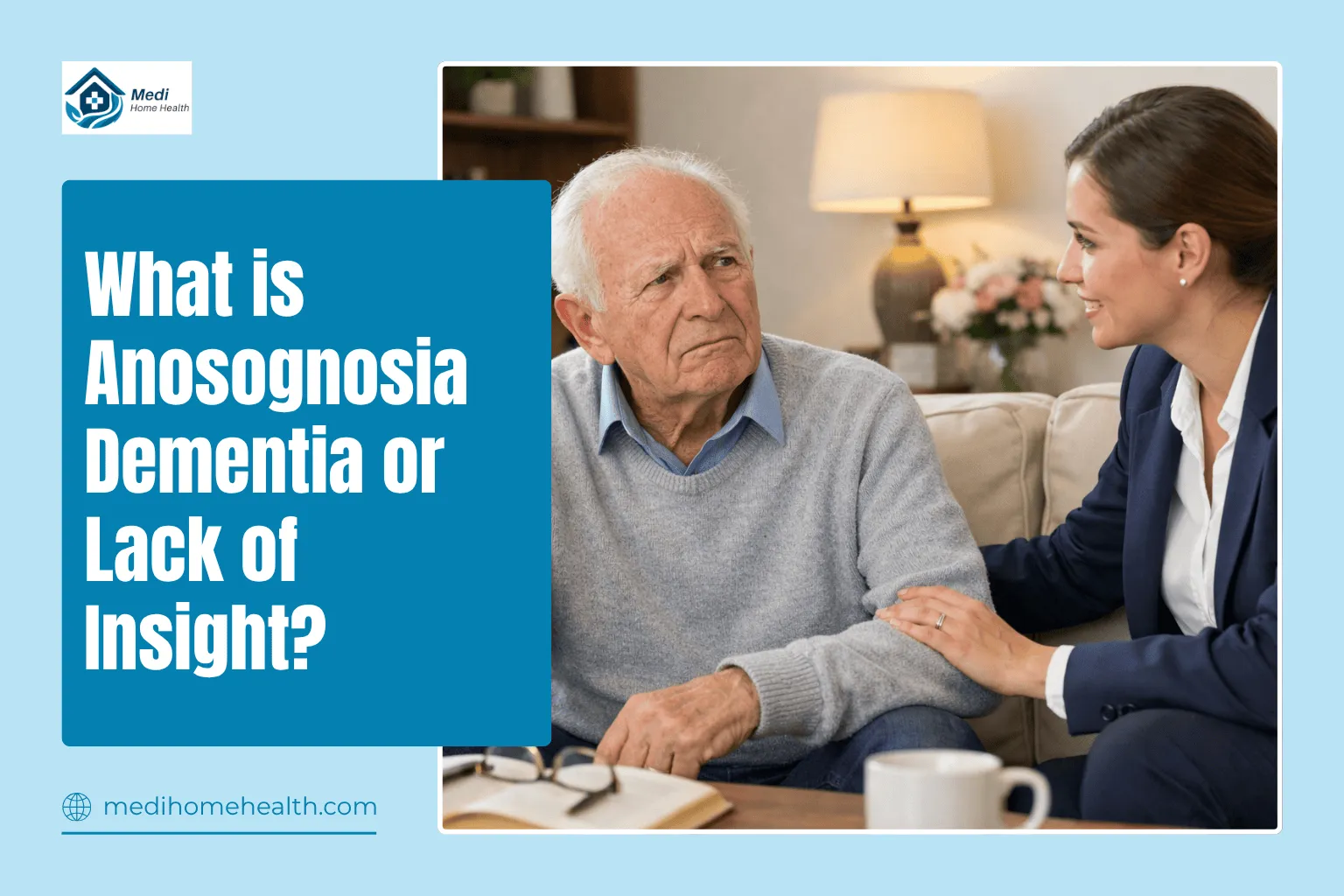
What happens when someone living with dementia cannot recognize the changes others clearly notice?
Anosognosia is a neurological condition where a person loses awareness of their own cognitive difficulties, and it is one of the most challenging and misunderstood symptoms linked to dementia. Unlike denial, which is emotional, anosognosia results from physical brain changes that disrupt self-awareness. The outcome is often confusing. A person may firmly state they are fine, even when obvious safety concerns are present.
They might try to prepare meals while no longer remembering how to use the stove. They may attempt to drive after previously getting lost and agreeing they would stop driving. They might decline assistance with medications, bills, or walking support, convinced that everything is under control. In many cases, they truly do not understand why others feel concerned.
Anosognosia is not stubborn behavior. It is not a simple refusal. It is a medical condition that calls for structure, patience, and thoughtful care to handle safely.
MediHomeHealth’s Clinical Expertise
Educational resources on anosognosia are available to help families better understand how reduced self-awareness affects decision-making and safety. These materials offer practical, research-based strategies for managing the emotional, cognitive, and daily care challenges that often arise. They provide guidance on reducing conflict, improving communication, and strengthening trust between care partners. Clear examples and real-life scenarios help families apply these strategies at home.
At MediHomeHealth, these principles are applied directly in the home setting, where safety concerns are immediate, emotions can run high, and care decisions must be handled with empathy.
How Anosognosia Appears in Everyday Situations
Anosognosia can change from one day to the next. At one point, a person may accept help; shortly after, they may strongly refuse it, certain that support is unnecessary.
Common signs include:
- Saying “I don’t have dementia” even after receiving a formal diagnosis
- Overrating personal abilities, such as declining a walker after recent falls
- Dismissing memory problems, medication needs, or safety concerns
- Objecting to care plans, medical visits, or the presence of caregivers
This gap between perception and reality can increase risk for both the individual and their care partner, physically, financially, and emotionally.
How MediHomeHealth Assists Clients and Families
At MediHomeHealth, caregivers and Client Success Managers are trained to identify signs of anosognosia and respond with respect and clinical skill. Our method includes:
- Care plans that focus on existing strengths rather than confrontation
- Consistent routines designed to improve safety without triggering pushback
- Home adjustments such as automatic stove shutoff devices or limiting access to car keys
- Practical assessments that compare actual abilities with perceived abilities
- Guidance for families dealing with high-conflict or higher-risk situations.
Why Early Attention Is Important
Research estimates that 60–80% of individuals with moderate dementia experience some degree of anosognosia. Yet it is frequently overlooked or not addressed until an emergency happens.
We believe that identifying it early and offering steady support can help prevent avoidable emergency room visits, reduce financial harm, and lower stress for families.
The aim is not to persuade someone that they are wrong. The goal is to provide support in a safe and respectful way, recognizing that awareness may vary from day to day.
Thinking About Home Care for a Loved One?
Our team can explain available care options and help create a plan that fits your family’s priorities, budget, and care needs. Call MediHomeHealth or reach out online, and we will respond within 24 hours.
More Blogs You May Like

What are Advance Directives: A Guide for Seniors
Retaining control over medical decisions is a key part of aging with respect and self-worth. Advance directives give...
Read More
The Significance of Companionship in Wellbeing of Elderly Loved Ones
As people grow older, staying in touch with others can become harder. Retirement, limited movement, and losing close...
Read More
Building and Maintaining Emotional Health as a Caregiver
Strong emotional support can make caregiving more manageable and less draining. Your support circle does not need to...
Read More