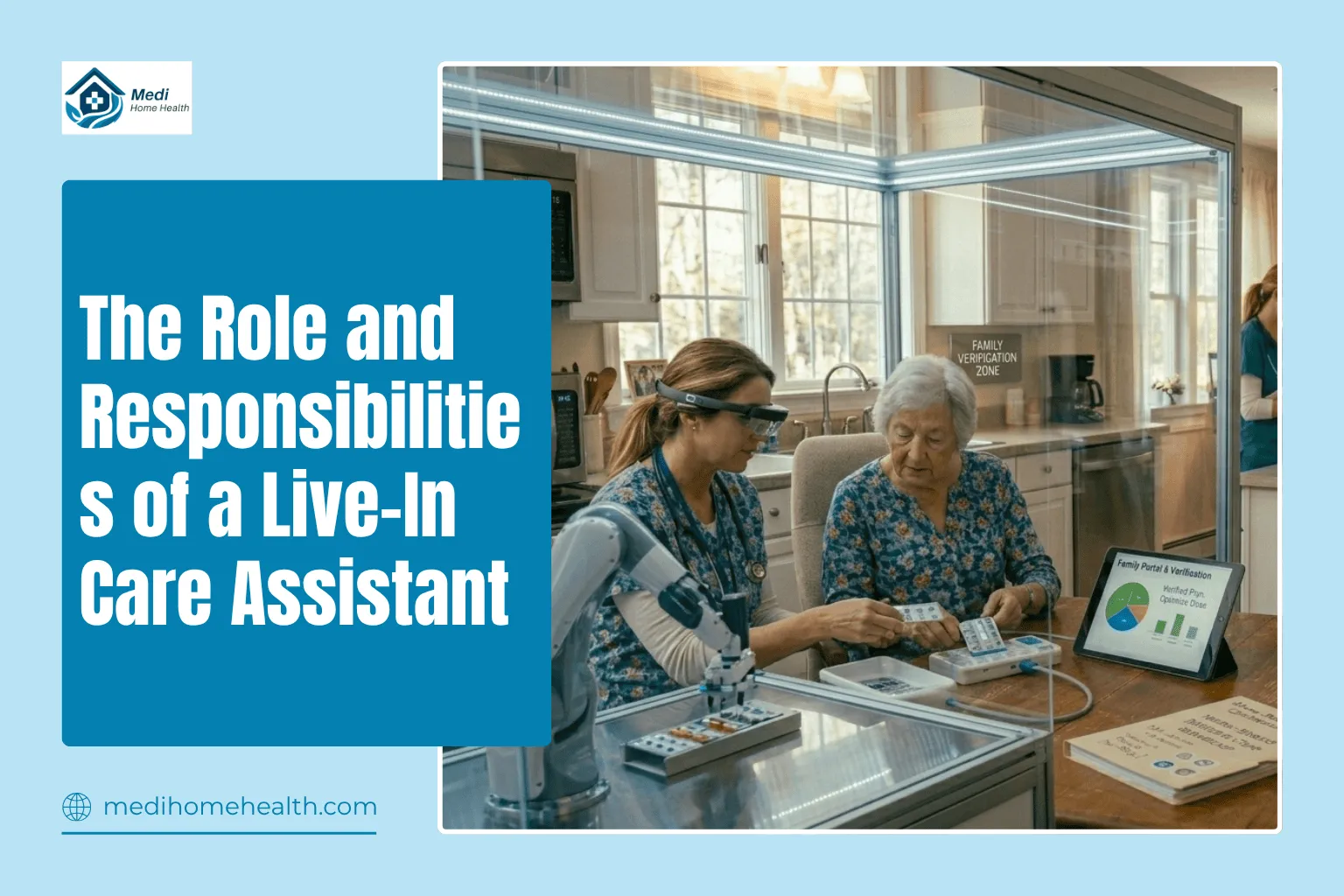
What is a live-in care assistant? A live-in care assistant is a trained care worker who gives full-time support to people in their own homes. Unlike standard care setups where carers come at set times, live-in care assistants stay in the home with the person they care for, providing both hands-on help and emotional support. This allows people, especially older adults or those living with disabilities, to keep their independence without needing to move into a care home.
What Does a Live-in Care Assistant Help With?
The job of a live-in care assistant is based on the specific needs of the person they are caring for. Their duties often include:
- Personal care, such as washing, getting dressed, and grooming.
- Mobility assistance, helping with walking, moving safely, and simple exercises.
- Medication prompts, making sure medicines are taken as directed.
- Meal preparation, planning and cooking healthy meals.
- Light household tasks, such as laundry, tidying, and basic cleaning.
- Companionship, spending time talking or joining in with hobbies and activities.
- Well-being checks, noticing any health changes and raising concerns when needed.
Because live-in care assistants remain in the home, they can offer steady and one-to-one support that can adjust as needs change during the day and overnight.
What Makes a Strong Live-in Care Assistant?
A good live-in care assistant does more than complete everyday duties, they bring care, patience, and reliability into each part of the role. Forming a positive connection with the person they support is important, as they often become a familiar and trusted presence.
Important qualities include:
- Empathy and kindness – Supporting a person emotionally as well as physically.
- Flexibility – Managing changes in care needs or daily routines.
- Communication skills – Keeping conversations clear, respectful, and honest with clients and families.
- Respect and discretion – Working in someone’s home calls for sensitivity and professionalism.
- Awareness – Noticing changes in mood or health and responding in the right way.
These qualities help build a caring setting where people feel secure and respected.
Training and Qualifications for the Role
Many live-in care assistants start with practical training on the job, but extra qualifications are often recommended to raise the standard of care they provide.
Typical training may include:
- The Care Certificate – Covers key areas such as safeguarding and person-centred care.
- Level 2 Diploma in Health and Social Care – Builds core care knowledge and skills.
- Level 3 Diploma – Focuses on more advanced care needs and greater responsibility.
- Specialist training – Such as dementia support, manual handling, or end-of-life care.
Regular training helps live-in care assistants stay current with good practice and care regulations.
Where Live-in Care Assistants Usually Work
As the title suggests, live-in care assistants work in the private homes of the people they support. This type of care comes with several clear advantages:
- Consistency of care – Having one regular carer helps build trust and comfort.
- Independence – Clients can keep control over their habits and daily routines.
- Familiar surroundings – Staying at home can be especially helpful for people living with dementia or anxiety.
Live-in care is a good option for those who need ongoing help but do not want to move into a residential care setting.
Why Families Choose a Live-in Care Assistant
Bringing in a live-in care assistant can offer reassurance and improve day-to-day life for both the individual and their family.
Main benefits include:
- Full-time care and safety – Ongoing support, including overnight, can lower the risk of accidents.
- Emotional support – Regular companionship can reduce feelings of isolation.
- Personalized support – Care is shaped around the person’s own needs and preferences.
- Family peace of mind – Having a trained carer in the home can bring comfort to loved ones.
For people living with long-term conditions, mobility issues, or memory loss, a live-in care assistant can make a major difference.
People asking what is a live-in care assistant may find that this role offers both personal satisfaction and steady career value, especially for carers who want to provide dependable, high-quality help in a home setting.
Why Live-in Care Assistants Are So Important
Live-in care assistants offer an important service that combines daily practical help with emotional and social support. They help people stay in their own homes as they age, recover after illness, or live with a disability while remaining in familiar surroundings.
What is a live-in care assistant in a wider sense? They provide stability, dignity, and respect, helping people live fuller lives with the support they need at home. Their role also reduces pressure on families, giving loved ones more time to focus on their relationship instead of full-time caring responsibilities.
Need Trusted Live-in Care Support?
At MediHomeHealth , we provide caring and fully trained live-in care assistants who deliver personalized one-to-one support. Whether your loved one needs help because of ageing, disability, or a specific health condition, we are here to help.
If you are thinking about live-in care for yourself or a family member, contact us today to talk through your needs and learn how we can support you.
More Blogs You May Like

How is End-of-Life Care Managed
End-of-life care is not only focused on medical support, it is also about respecting a person’s choices, keeping...
Read More
What is the Job of Live-in Caregivers?
A live-in care aide offers continuous, day-to-day support to help individuals stay safe and comfortable in their own...
Read More
Tech for Seniors in Digital Age to Stay Socially Connected
In the current digital era, technology plays a big part in helping seniors stay in touch, especially for...
Read More