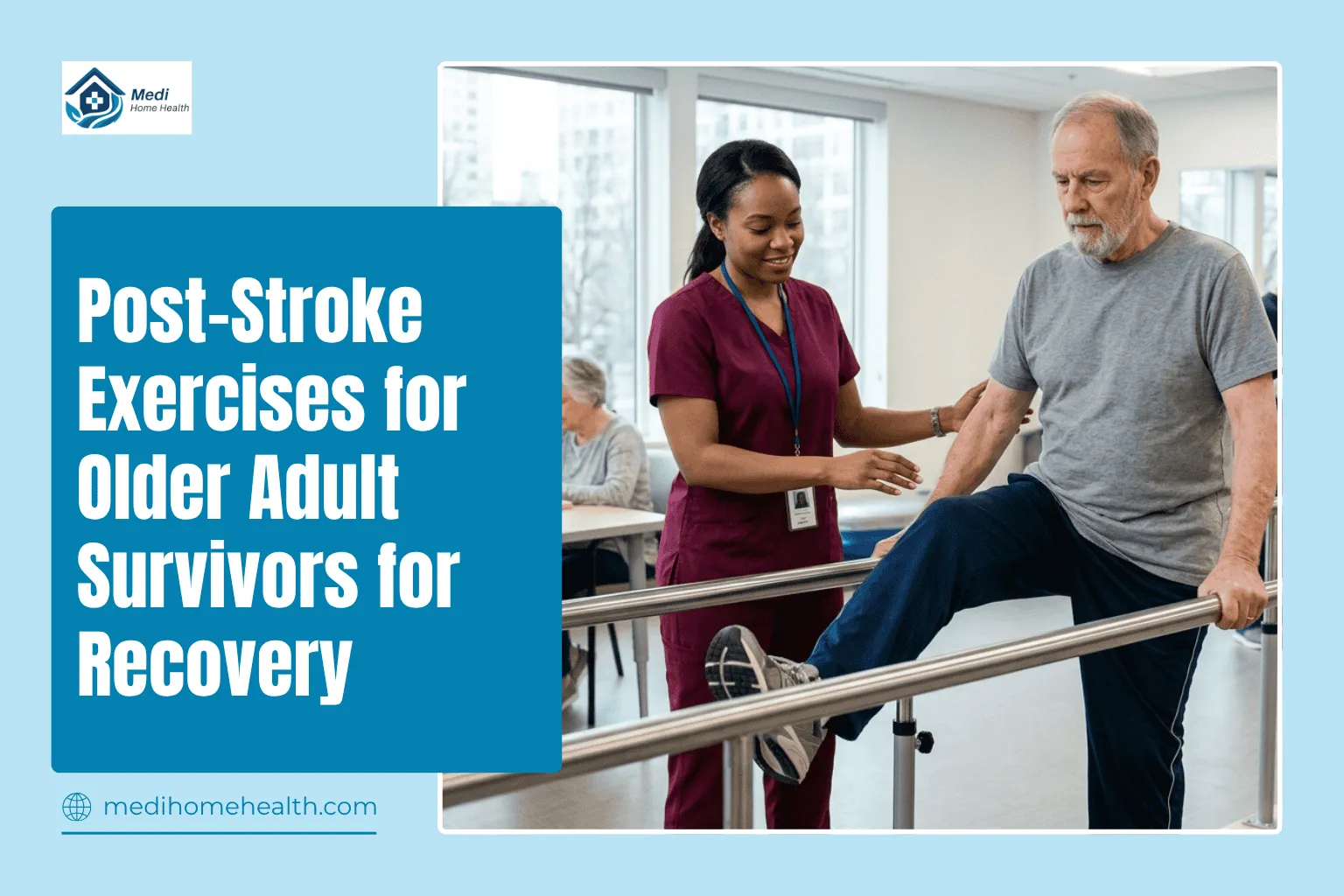
Each year, hundreds of thousands of adults in the United States experience strokes. The level of physical impairment depends on where the stroke occurred in the brain and how severe it was. After the person is medically stable, rehabilitation usually begins. Exercising for at least 30 minutes a day, two or three times a week, can support recovery and help seniors rebuild strength and mobility. Many exercises can be done independently or with the help of a caregiver.
Seated Leg Exercises
Stroke survivors who have difficulty standing or walking may benefit from strengthening their legs while seated. Simple leg extensions can build the muscles needed for weight-bearing and also encourage circulation, helping oxygen and nutrients reach the lower body. Seniors with foot drop may need to work on ankle mobility and strength through gentle rotations and flexion movements. Including lower-body exercises in rehabilitation routines can improve flexibility and stability.
Some seniors only need help with a few daily activities to maintain their independence. Others recovering from serious illnesses, such as a stroke, may need more extensive support. Fortunately, Loudoun County and Virginia seniors can rely on professional live-in care. A trained and dedicated caregiver can help make home a safer and more comfortable place for your loved one to recover.
Seated Upper Body Exercises
Upper body exercises performed while sitting can help seniors regain range of motion in their arms and hands. Activities such as working with clay, coloring, or picking up small objects can improve fine and gross motor skills. Clasping both hands together and moving the arms in slow circles may also increase flexibility from the shoulders down to the fingers.
Stationary Cycling
Using a stationary bike is a good way to strengthen the legs and improve circulation. The repetitive pedaling motion can also support flexibility and balance. Some exercise bikes include upper-body rowing motions, which can help strengthen the arms and shoulders as well. Seniors can perform this activity at their own pace, making it a flexible option for stroke rehabilitation.
Walking
For seniors who are able to stand, bear weight, and walk, regular walking can improve cardiovascular health, balance, flexibility, and strength. Even a short walk outdoors may also lift mood and reduce feelings of frustration or depression that sometimes occur during stroke recovery. Spending time outside and enjoying nature can provide emotional as well as physical benefits.
A home caregiver can help your loved one exercise safely and comfortably. Families seeking trusted home care providers can turn to MediHomeHealth. From respite care to specialized Alzheimer’s, dementia, stroke, and Parkinson’s care, there are many ways professional caregivers can support seniors and their families.
Swimming and Water Therapy
Hydrotherapy offers gentle resistance from the water, which can strengthen muscles while improving cardiovascular fitness and flexibility. For stroke survivors with weakness or partial paralysis, water buoyancy can make movement feel easier and less tiring. Warm water may also help relax tight muscles and connective tissues, making range-of-motion exercises more comfortable.
Tai Chi
Balance problems are a major concern for stroke survivors because they increase the risk of falls. Tai chi uses slow, controlled movements that help seniors focus on posture, coordination, and body awareness. This gentle form of exercise can also improve flexibility and overall strength through careful positioning and movement.
A professional caregiver can be a valuable source of support for a senior recovering from a stroke. The type of home care needed may vary from a few hours of assistance each day to around-the-clock care. At MediHomeHealth, care plans are tailored to each senior’s individual needs and can be adjusted as recovery progresses. To learn more about flexible in-home care plans, call +1 (253) 565-2365 today.
More Blogs You May Like

Protecting Seniors from Fraud and Financial Exploitation
Financial abuse is an increasing problem for older adults, often causing serious consequences. As people age, they can...
Read More
Ways to Provide Care for Senior Loved Ones with Alzheimer’s Disease
Looking after an aging parent with Alzheimer’s can bring meaningful moments, but it can also be difficult. As...
Read More
What to Consider When Hiring a Private Caregiver?
For many families, this situation comes up often: when an older adult begins to need more support than...
Read More