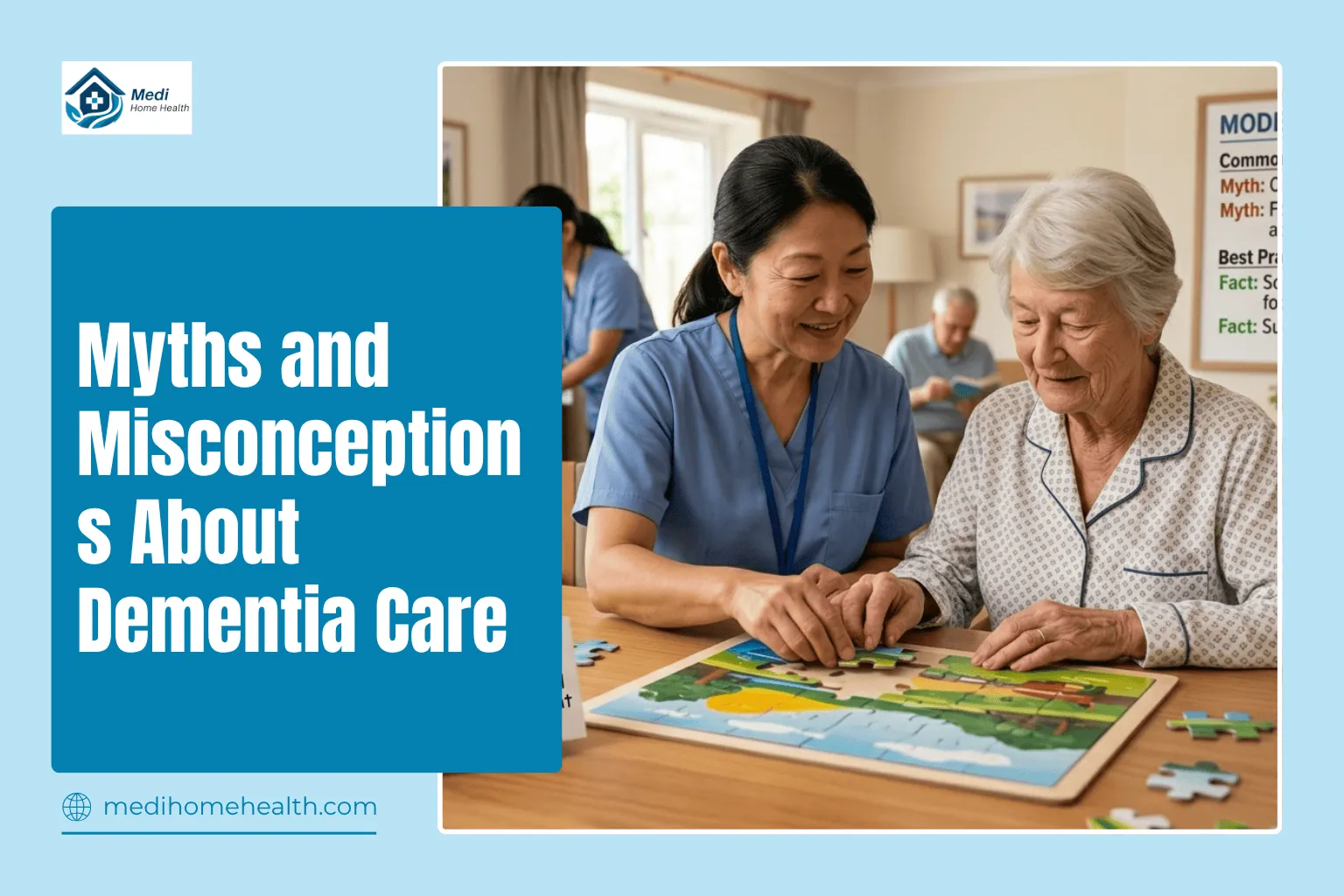
The biggest misunderstandings about dementia caregiving include assuming dementia is only about memory problems, believing constant correction is helpful, thinking caregivers must manage everything alone, and assuming quality of life or future planning no longer matters. Knowing the truth behind these ideas can help families provide care that is kinder, more effective, and easier to maintain over time.
Supporting a loved one with dementia can be emotionally challenging, and many caregivers begin the journey with incorrect assumptions. Clearing up these myths can reduce frustration, guilt, and exhaustion while helping families respond to the disease with greater understanding.
Is Dementia Just Memory Loss?
Dementia affects thinking, communication, judgment, behavior, and sometimes physical abilities, not only memory. One of the most common myths is that dementia is simply forgetfulness. Although memory problems are a major symptom, dementia is actually a group of symptoms that affects many areas of brain function.
Caregivers are often surprised when a loved one begins showing anger, suspicion, withdrawal, or other personality changes. These behaviors are usually part of the disease process rather than intentional actions. Recognizing this can help families respond with empathy instead of frustration. Understanding the broader effects of dementia also makes it easier to prepare for emotional, behavioral, and physical challenges as care needs change.
Alzheimer’s disease remains the most frequently diagnosed form of dementia. If you need reliable Alzheimer’s care in Loudoun Country and Virginia, MediHomeHealth provides specialized memory care, as well as support for dementia, Parkinson’s disease, and stroke recovery, through experienced and compassionate caregivers.
Should You Correct Someone with Dementia?
Correcting a person with dementia often creates more confusion and distress than understanding. It is natural to want to point out factual mistakes. In dementia care, however, repeatedly trying to pull someone back into “our” version of reality usually increases agitation for both the senior and the caregiver.
Many professionals recommend validating the person’s feelings and gently redirecting the conversation. If your loved one believes he or she needs to go to work or expects a deceased family member to visit, arguing rarely helps. A calmer approach might be:
Validate: “It seems like you miss your father very much.”
Redirect: “Tell me about his favorite place.”
This approach protects dignity, lowers anxiety, and often leads to a more peaceful interaction.
Can Only Care Aides Handle Dementia Care?
Dementia care is usually safer and more sustainable when support is shared rather than carried by one caregiver alone. Many family caregivers feel they should handle everything themselves or that asking for help means they have failed. This mindset can quickly lead to burnout and may reduce the quality of care over time.
In reality, dementia care often requires a team. Family members, friends, professional caregivers, adult day programs, and support groups can all play a role. Respite care is especially important because it gives primary caregivers time to rest and recover. Support groups also provide emotional encouragement and practical advice from people facing similar situations. Accepting help is not a weakness—it helps caregivers stay healthier and more effective in the long run.
Can Quality of Life Still Improve?
Thoughtful care, routine, and meaningful activities can still bring comfort, connection, and enjoyment. Dementia is progressive and currently has no cure, but that does not mean life becomes only decline and loss. Many families discover that meaningful moments and emotional connection can continue long after diagnosis.
Focusing on abilities that remain, rather than only on losses, can make a significant difference.
- Music and art: Creative activities may help evoke memories and emotions that are difficult to express through words.
- Routine: A predictable schedule can increase comfort and reduce anxiety.
- Sensory experiences: Gentle touch, favorite scents, or looking through old photographs can help create moments of connection.
Even in later stages, people with dementia can still experience comfort, affection, and joy. Small changes in communication and the home environment can create more opportunities for positive interactions.
Living at home with dementia can be challenging, but many seniors are able to remain there with appropriate support. Families in Loudoun County can rely on MediHomeHealth for professional dementia home care that includes companionship, medication reminders, meal assistance, and other daily support services.
Is It Too Late to Plan for Future Care?
Many families believe that once dementia symptoms appear, legal and financial planning can no longer be done. While earlier planning is always easier, it is often still possible to make important decisions after symptoms begin, provided the individual still has legal capacity.
If your loved one can still understand and sign documents, he or she may be able to appoint powers of attorney and express preferences about future care. Even if capacity is later lost, families may still need to pursue guardianship or conservatorship to protect finances and healthcare decisions. Planning ahead for living arrangements, medical care, and financial management can reduce stress and help ensure future decisions reflect your loved one’s wishes.
Although there is currently no cure for dementia, professional caregivers can help seniors manage symptoms while remaining at home. Families in Loudoun County and Virginia who need dependable in-home support can turn to MediHomeHealth. The agency helps older adults maintain healthy routines, social engagement, and mental stimulation through programs designed to support cognitive health and overall wellbeing.
More Blogs You May Like
Emotional Resilience: How Caregivers Can Stay Happy?
Practicing resilience is an important part of staying happy as a home caregiver. Caring for an older loved...
Read More
Helping Children Stay Connected with a Loved One Who Has Dementia
When a grandparent or another family elder is living with Alzheimer’s disease or a different form of dementia,...
Read More
Why Senior Sleep Matters for a Healthy Mood and Memory
Sleep is far more than a daily habit. It is a necessary biological process that gives the mind...
Read More