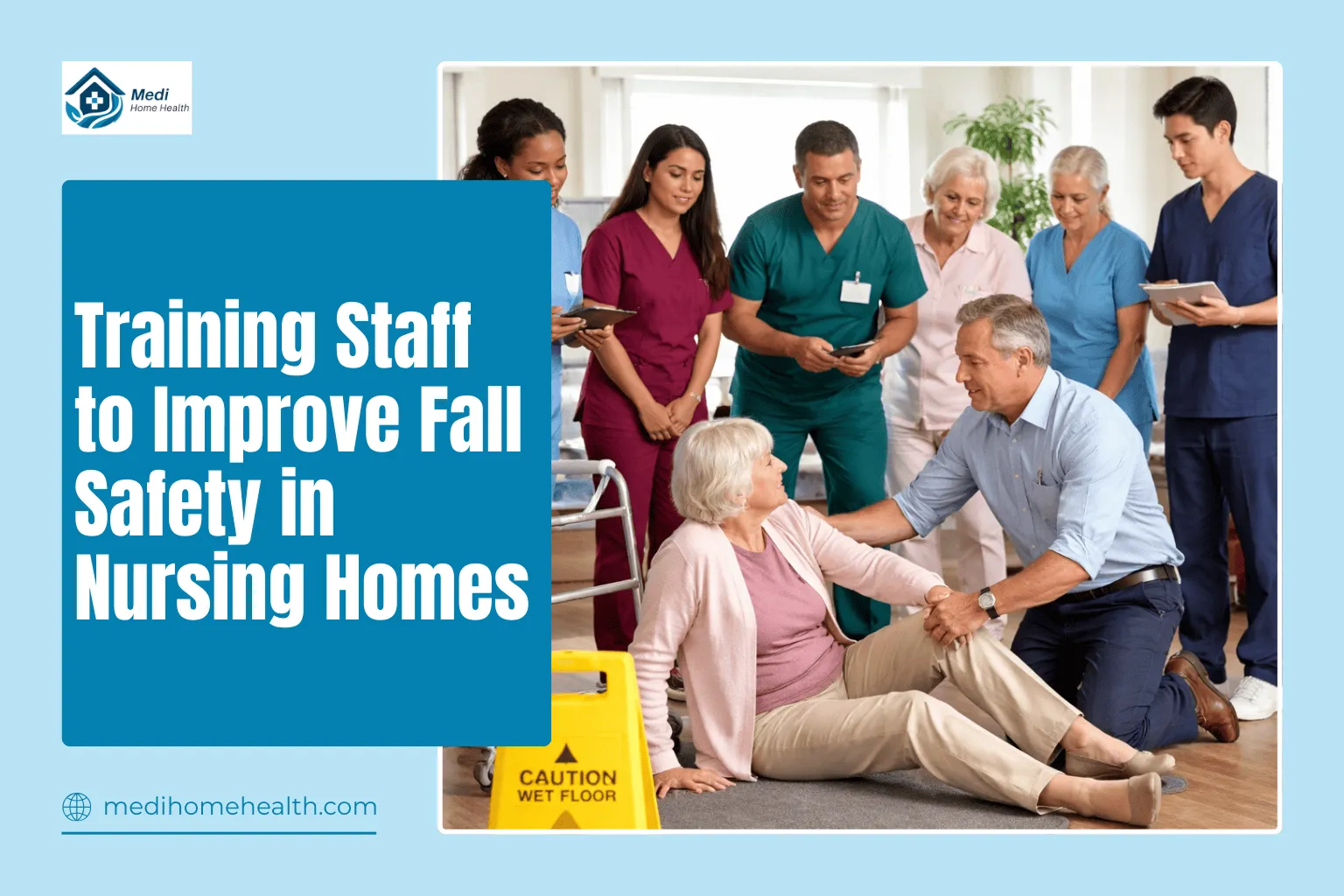
Falls remain one of the most frequent and serious safety concerns in nursing homes, often resulting in injuries, hospital stays, or loss of life. Data from the Centers for Medicare and Medicaid Services (CMS) shows that nearly half to three quarters of nursing home residents experience a fall each year, many of which could be avoided through proper preparation and early action by staff.
Strong fall prevention efforts begin with staff members who are trained to spot risks, apply safety steps, and react correctly when an incident occurs. With regular instruction, practical training, and proven safety practices, nursing home leaders can improve resident safety and lower the number of preventable falls.
There are different tools in industry that support care quality by offering direction, education tools, and practical recommendations that strengthen fall prevention programs in long term care settings.
Core Training Focus Areas for Fall Prevention
Effective fall prevention begins with focused staff training that helps caregivers recognize risks and respond appropriately. By strengthening awareness, practical skills, and decision making, care teams can reduce preventable falls and improve resident safety.
Identifying Fall Risk Factors
A key part of fall prevention education is helping staff recognize common risks that increase the chance of falling, including:
- Medical conditions: Residents living with Parkinson’s disease, stroke effects, arthritis, bone loss, or memory related conditions such as dementia face higher fall risk.
- Medication impact: Some prescriptions including sedatives, blood pressure drugs, and diuretics may cause weakness, dizziness, or sleepiness.
- Environmental concerns: Poor lighting, slippery floors, cluttered walkways, or misplaced furniture often lead to trips or loss of balance.
- Mobility challenges: Residents with balance issues or muscle weakness may rely on walkers, canes, or wheelchairs for safer movement.
Practical Training for Safe Resident Movement
Staff must receive proper instruction on how to assist residents with movement to lower fall risk during daily care. Training areas should cover:
- Correct gait belt use: Teaching staff how to help residents stand, walk, or transfer safely using a gait belt.
- Safe transfers: Instruction on moving residents from bed to chair, wheelchair to toilet, and the use of mechanical lifts while using proper body mechanics.
- Mobility device support: Guidance on assisting residents with walkers, canes, or wheelchairs to maintain balance and control.
Tip: Ongoing refresher sessions and hands on practice help staff maintain confidence and proper technique.
Response Guidelines After a Fall
Even with prevention efforts in place, falls can still happen. Staff must be trained on what steps to take after a fall to reduce harm and provide proper care.
Immediate Steps Following a Fall:
- Remain calm and assess the scene: Avoid moving the resident unless there is immediate danger.
- Check for injuries: Look for pain, swelling, bruising, or signs that medical care may be required.
- Seek assistance when needed: Contact nursing staff, physicians, or emergency services as appropriate.
- Offer reassurance: Residents may feel frightened or confused, so emotional support is essential.
- Record the incident: Complete a detailed report describing how the resident was found, their position, surrounding objects, any incontinence, statements made by the resident, and other details that may guide future prevention.
Reporting and Root Cause Review
Accurate documentation plays a major role in preventing future falls. Staff should be trained to:
- Complete incident reports promptly after a fall occurs.
- Conduct root cause reviews to identify contributing factors such as environment, medications, or mobility limits.
- Apply corrective actions including care plan updates, medication review, or safety improvements.
- Tracking fall events allows leadership teams to recognize patterns and adjust prevention plans as needed.
Tip: Electronic health records and fall tracking tools can help monitor trends and improve response planning.
Building a Long-Term Fall Prevention Mindset
Lasting success depends on creating a shared responsibility for fall prevention through continued education and teamwork.
Ways to Support a Fall Prevention Culture
- Schedule routine training sessions during onboarding, annually, quarterly, and when audit concerns arise.
- Promote open communication among caregivers, nurses, and administrators.
- Practice fall response drills to prepare staff for real situations.
- Include residents and families in education efforts so they understand risks and prevention steps.
Why Staff Training Makes a Difference
Falls are rarely random events; many can be avoided with proper training, early assessment, and consistent safety practices.
By strengthening fall prevention education, nursing homes can:
- Lower fall related injuries and hospital admissions
- Increase resident confidence and daily comfort
- Develop a more skilled and prepared care team
Administrators and frontline staff share responsibility for resident safety. By working with nursing home consultants, facilities gain access to expert guidance and tools that support ongoing improvement in fall prevention efforts.
More Blogs You May Like

Senior Care: What to Do When Your Loved One Needs More Care?
It can be hard to tell when a loved one may need extra help at home. If you...
Read More
Senior Care: 5 Safe Exercises for 70-Year-Old Woman
If you're helping care for a 70-year-old woman, you likely want her to stay healthy, active, and independent...
Read More
Evaluating the Quality of Care Provided by a Home Care Agency
Choosing a home care agency for yourself or a loved one is an important step. You want to...
Read More