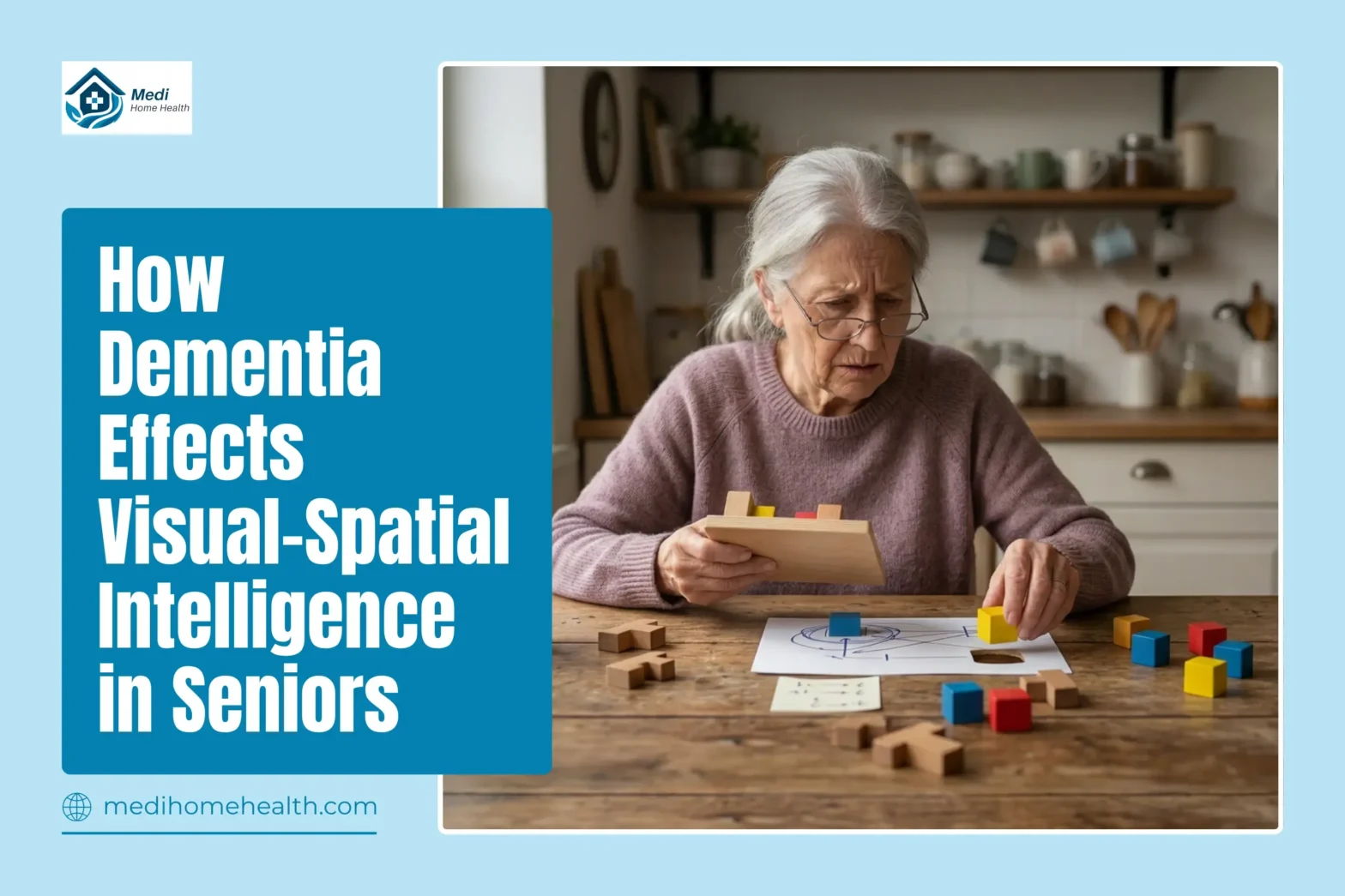
Dementia can lead to a wide range of symptoms, many of which affect how the brain functions. Although memory problems are most often linked to this condition, many people do not know that dementia can also greatly affect a senior’s ability to process visual information. In fact, dementia and changes in vision may often appear at the same time. If your older loved one has dementia, you may want to understand how the condition can affect his or her vision.
1. Seeing Things That Aren’t There
Hallucinations are among the common difficulties experienced by older adults living with dementia. Seniors with this condition may see altered versions of what is actually around them. A hallucination means “seeing” or “perceiving” things such as animals, people, or objects that do not exist, while an illusion can happen because of the appearance of an object. For instance, a toilet matching the color of the wall behind it might appear to be missing.
While hallucinations may be upsetting for older adults and their caregivers, these false perceptions do not last forever. You may help reduce hallucinations in seniors with dementia by improving the lighting inside the home and avoiding striped or brightly patterned flooring and furniture. You can also reduce these incidents by choosing medium-contrast colors that make important objects easier for your loved one to notice.
Vision problems caused by dementia can make it harder for older adults to manage daily activities independently. If your senior loved one has received a serious diagnosis and requires help with tasks such as meal preparation, transportation, bathing, and grooming, contact MediHomeHealth, a trusted provider of home care services for families. We also provide complete support for seniors living with dementia, Alzheimer’s, and Parkinson’s.
2. Difficulty Recognizing People and Objects
Damage to specific areas of the brain can make it harder for your loved one to recognize or recall the names of common objects or people he or she knows well. Although this may be frustrating, try not to focus on errors or correct your loved one over and over. Instead, provide regular reminders or use pictures, visual signals, and gestures to support better communication.
Caring for an older loved one can be difficult for families without experience or professional knowledge in home care, but they do not have to manage these responsibilities alone. Family caregivers in Loudoun County, VA can turn to MediHomeHealth for the support they need. We offer high-quality live-in and respite care along with complete Alzheimer’s, dementia, stroke, and Parkinson’s care.
3. Problems Judging Distance
When paired with normal age-related changes in vision, the visual processing problems linked to dementia can cause difficulties with judging distance and depth. Areas involved in visual perception may become reduced because of dementia, changing the way older adults interpret what they see. Seniors with dementia may struggle to recognize objects and people nearby. Your loved one could walk into objects, move away from doorways, or lift his or her feet too high over shadows and changes in floor surfaces.
Difficulty judging depth can raise the risk of falls because your loved one may not always recognize when he or she needs to step up or down. You can support your loved one by making sure there is enough lighting throughout the home and placing reflective tape to show changes in floor levels.
4. Incorrectly Reading Visual Information
Problems with visual perception may occur when the brain does not correctly interpret what the eyes are seeing. For instance, a shiny floor might look wet, or a dark rug could seem like a deep opening. An older adult with dementia may mistake shadows or reflections for something threatening, such as a stranger. This can become more noticeable during the late afternoon or evening, when sundowning may increase confusion and anxiety. You can help by taking away decorative mirrors, closing blinds and curtains, and adding more lights to reduce shadows.
Even with the best intentions, caring for an older loved one with dementia can be difficult. Fortunately, MediHomeHealth is available to provide support as a trusted provider of in-home care. Loudoun County and Virginia families can benefit from our flexible and customizable care plans, and our caregivers stay informed about current developments in senior care. To learn more about our quality-assured services, call us at +1 (253) 565-2365 today.
More Blogs You May Like

Exploring the Health Benefits of Laughter for Older Adults
A good laugh can do more for an older adult than simply brighten the day. Laughing may support...
Read More
Nutritious Foods Every Older Woman Should Include in Her Diet
As women grow older, their bodies require fewer calories than they did in earlier years. Since every meal...
Read More
What are In-Home Personal Care Services for Seniors
As people age, everyday activities that once felt simple can start to feel harder. Tasks like getting dressed,...
Read More