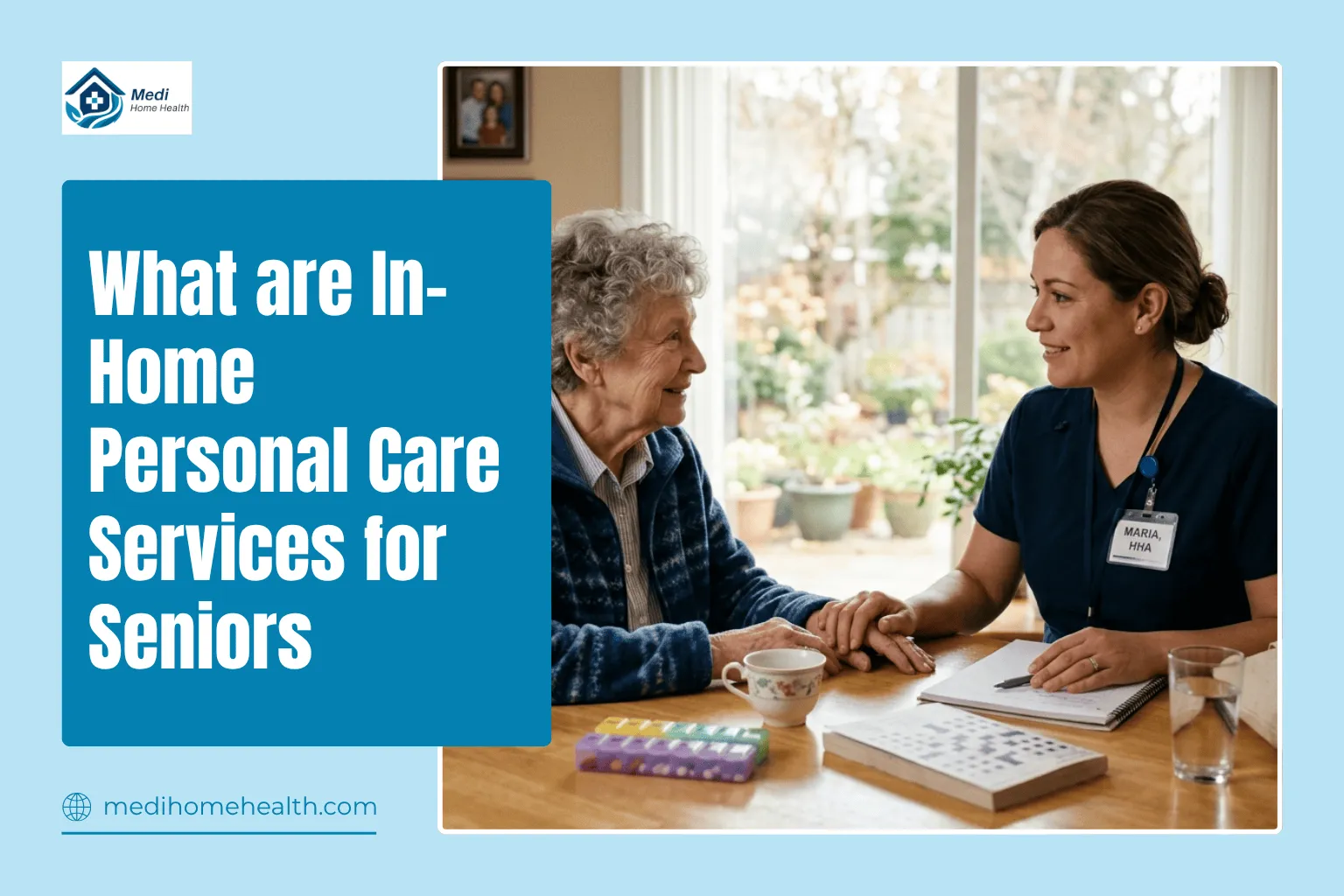
As people age, everyday activities that once felt simple can start to feel harder. Tasks like getting dressed, cooking meals, or moving around the home may need extra help. Personal care is meant to support older adults in keeping their routines, staying independent, and feeling at ease in their own space.
At MediHomeHealth, we believe personal care is not only about physical help, it also supports dignity, independence, and overall well-being. Whether support is needed now and then or every day, the right help can make a clear difference.
Personal care is adjusted to suit each person, making sure they get the support they need while still feeling like themselves. Below are the main areas where a caregiver can help:
1. Help with Daily Hygiene
Staying clean and well-groomed is important for both health and confidence, but many older adults find these tasks difficult due to limited movement, joint pain, or memory issues. Caregivers offer gentle and respectful help with:
- Bathing and showering
- Hair washing and styling
- Teeth brushing and denture care
- Shaving and skin care
- Nail care
Keeping up with hygiene helps reduce the risk of infections, improves confidence, and supports overall health. Caregivers always respect privacy and personal choices so individuals feel comfortable and respected.
2. Dressing and Personal Appearance
Getting dressed each day can become stressful when mobility is limited or joints are stiff. Caregivers support older adults in choosing suitable clothing, helping with fastenings like buttons or zippers, and making sure they feel comfortable and presentable.
Even simple self-care steps like grooming hair, using lotion, or wearing preferred clothes can lift mood and support confidence.
3. Support with Meals and Eating
A balanced diet is key to maintaining strength and energy, but preparing and eating meals can become difficult with age. Some individuals may struggle with cooking, using kitchen tools, or remembering to eat.
Caregivers can help by:
- Preparing healthy meals at home
- Following dietary needs and preferences
- Helping with eating when needed
- Encouraging regular fluid intake
Mealtimes also offer a chance for social interaction. Sharing a meal can make the experience more enjoyable rather than feeling isolated.
4. Help with Toileting and Continence Care
Maintaining dignity and cleanliness is especially important when it comes to toileting needs. Some older adults may need help reaching the bathroom, while others may need support with continence care.
Caregivers provide respectful help with:
- Using the toilet safely
- Changing continence products
- Maintaining cleanliness and skin care
This type of support improves comfort, lowers health risks, and helps individuals feel more confident in their routine.
5. Medication Support
Managing several medicines at different times can be confusing. While caregivers do not give medication directly, they provide reminders so it is taken properly and on time.
They also help with:
- Organizing medication for easy use
- Keeping track of prescriptions
- Watching for any side effects or issues
This support helps individuals stay on track with their health and reduces the risk of missed doses.
6. Support with Movement
Staying active is important for strength, flexibility, and general health, but people with mobility issues often worry about falling. A caregiver can assist by providing:
- Support while walking around the house or outside
- Help with moving between bed, chairs, or wheelchairs
- Guidance when using aids like walkers or sticks
- Light exercises to support movement and strength
Even small amounts of movement can reduce stiffness, support independence, and improve well-being.
Why Personal Care Matters
Personal care is not only about help with tasks, it supports independence and self-respect. Staying at home, receiving kind support, and having someone around can improve quality of life.
- At MediHomeHealth, families often share how relieved they feel knowing their loved ones are cared for with attention and respect. The benefits of personal care include:
- Reducing risks like falls through mobility support
- Lowering stress for both individuals and families
- Offering companionship to reduce loneliness
- Helping people stay independent with the right level of help
For families, knowing someone reliable is there provides reassurance, especially when they cannot always be present.
Who Delivers Personal Care
Qualified caregivers provide personal care with care and understanding, making sure individuals receive the help they need without losing independence.
Care plans are flexible and can include:
- Support for a few hours each week
- Daily visits for help and companionship
- Full-time live-in care for ongoing needs
Each situation is different, and care can be adjusted over time as needs change.
Personal Care with Compassion
Personal care is about more than helping with daily tasks, it supports comfort, dignity, and emotional well-being. Whether support is occasional or full-time, receiving help at home allows individuals to remain independent while improving their quality of life.If you or someone close to you may benefit from professional care at home, MediHomeHealth is ready to support you. Contact us today to learn more about our personalized care services.
More Blogs You May Like

Daily Activities and Pastimes that Keep Seniors Healthy & Engaged
Keeping busy each day gives older adults both physical movement and mental stimulation, which can support memory, overall...
Read More
Benefits of In-Home Care for Your Loved Ones
Home is often where people feel safest and most at ease. Staying in a familiar place, surrounded by...
Read More
Emotional Resilience: How Caregivers Can Stay Happy?
Practicing resilience is an important part of staying happy as a home caregiver. Caring for an older loved...
Read More