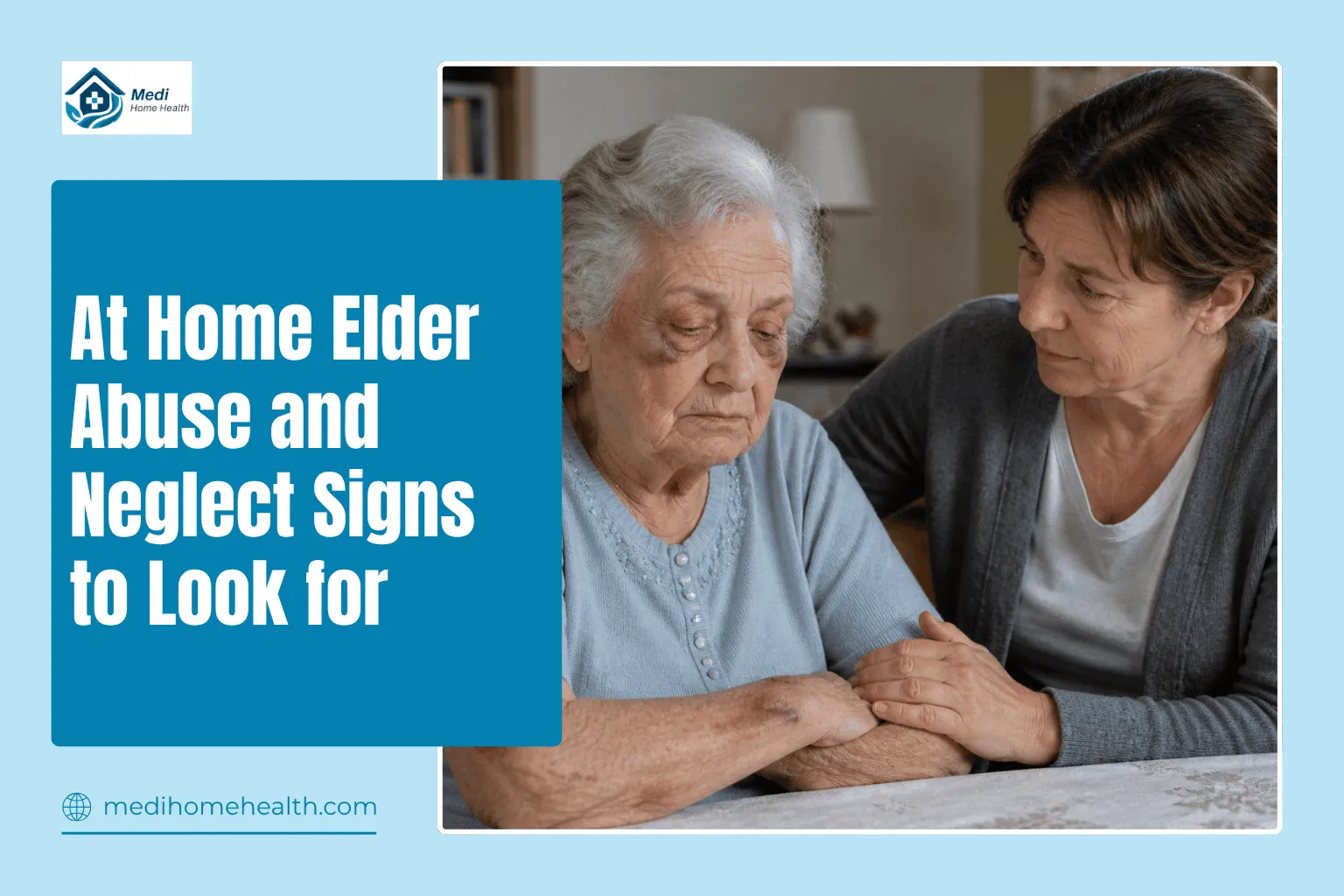
No family wants to think that an older relative could be harmed, especially in the one place where they should feel most secure, their own home. Sadly, abuse and neglect can happen, and the warning signs are not always easy to see.
At MediHomeHealth, we believe awareness is the first step toward protection. Families who understand the signs are more likely to notice problems early and step in before matters become more serious.
Here is how to identify different forms of abuse, what signs to notice, and what steps to take if something concerns you.
Warning Signs of Physical Harm
Physical abuse is often easier to notice than other forms of mistreatment, yet it can still be overlooked or explained away as an accident.
Watch for:
- Unexplained bruises, cuts, or burns
- Repeated injuries or fractures
- Marks on wrists or ankles that may point to restraint
- Delays in receiving medical care
- Unclear or nervous explanations about injuries
If your loved one seems uncomfortable or avoids explaining an injury, trust your judgment. Ask calm but direct questions and keep note of repeated patterns.
Emotional Abuse: When Behavior Changes
Emotional or mental abuse may leave no visible marks, but it can deeply affect a person’s well-being. It often appears through changes in mood or actions.
Look for:
- Withdrawal or unusual quietness
- Fear, especially near one specific person
- Low confidence or sudden self-doubt
- Signs of anxiety or depression
- Avoiding eye contact or reacting strongly to raised voices
If someone who was once outgoing becomes silent or nervous around another person, take that seriously.
Signs That Basic Care Is Missing
Neglect happens when a person is not receiving proper support such as meals, hygiene help, medication, or general care. It may be intentional or caused by poor support, but either way it can harm health.
Watch for:
- Poor hygiene or strong body odor
- Dirty clothing, soiled bedding, or an unclean home
- Noticeable weight loss or signs of hunger
- Missed medications or untreated health problems
- A cold home or missing daily essentials
If a caregiver seems stressed, absent, or careless, neglect can happen quietly unless someone is paying attention.
Noticing Financial Exploitation
Older adults can also be targets of money-related abuse by strangers, caregivers, or even relatives. It can be difficult to spot, especially when the person feels embarrassed or confused.
Possible signs include:
- Unusual bank withdrawals or transfers
- Missing money, cards, or valuables
- Sudden updates to wills, accounts, or legal papers
- A new person showing unusual interest in finances
- Stress or confusion when discussing money matters
If something feels unusual, check in kindly and offer help.
Sexual Abuse: Hard to Discuss but Important
Sexual abuse is painful to talk about, but older adults can be affected as well. Many do not report it because of fear, shame, or confusion.
Be alert for:
- Pain or injuries in private areas
- Torn or stained clothing
- Fear or distress around certain people
- Sudden behavior changes without a clear reason
If you suspect harm, treat it seriously and seek help right away.
Notice the Actions of Others
Sometimes the warning signs come from the behavior of people around your loved one rather than from the loved one directly.
Pay attention to:
- Someone speaking for them when they can answer themselves
- A caregiver becoming defensive when asked questions
- Difficulty arranging visits or private talks
- Impatience, shouting, or controlling actions
- A history of substance misuse or aggression in a caregiver
If someone involved in care seems secretive or makes you uneasy, do not ignore that feeling.
What to Do If You Are Concerned
If you think abuse or neglect may be happening, take practical steps:
- Speak with your loved one privately. Keep the conversation calm and supportive. Let them know they can speak openly without fear.
- Write down what you notice. Dates, details, and conversations may help later.
- Report urgent danger to 911 immediately.
- Contact Adult Protective Services in your state or local area for guidance.
- If care is being provided through an agency, report concerns to the provider and any relevant state licensing authority.
- Trust your instincts. If something feels wrong, it is worth checking.
Why Quality Care Matters
Sometimes neglect happens because a caregiver lacks training, support, or supervision rather than from deliberate cruelty. That is why choosing a trusted provider matters so much.
At MediHomeHealth, safety and dignity come first. Our caregivers are screened, trained, and supported. We value clear communication with families, regular follow-ups, and respectful care so everyone feels secure.
Need Guidance?
If you are worried about an older family member and do not know what to do next, we are here to help. Our team can talk through your concerns, share advice, and help you find safer in-home care options in Loudoun Country, Virginia. Contact MediHomeHealth today. Everyone deserves to feel safe, respected, and cared for at home.
More Blogs You May Like

How In-Home Care Enhances Quality of Life
Receiving support at home brings comfort, familiarity, and personal help, letting you keep your independence while getting the...
Read More
What is Anosognosia Dementia or Lack of Insight?
What happens when someone living with dementia cannot recognize the changes others clearly notice?
Read More
Supporting Dementia Caregivers Through Respite Care Options
Looking after an older family member with dementia can take a significant toll on both emotional and physical...
Read More