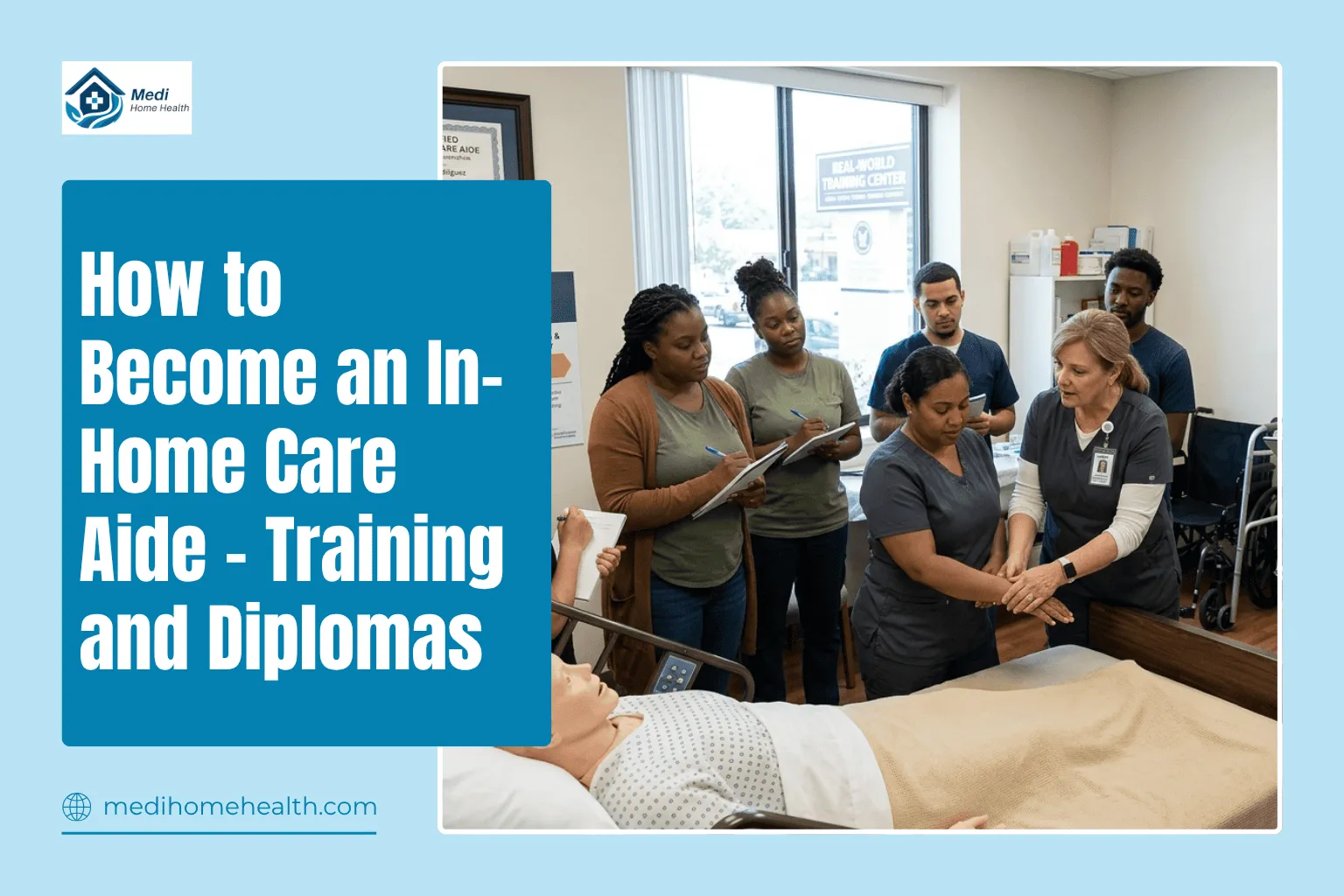
Choosing an in-home caregiver for someone you love is an important step. It is important to find a person with the right skills, training, and background to give safe and caring support. What training and qualifications should you expect from an in-home care aide? A properly trained carer does more than help with daily needs, they also give families confidence that their loved one is being cared for properly.
Knowing what training and qualifications carers usually have can help you make a better choice when setting up care.
Core Training Every In-Home Caregiver Should Have
All professional carers should have a solid base in the main parts of health and social care. In the US and other parts of globe, many complete an induction program that follows the Care Certificate, which covers areas such as:
- Safeguarding adults – Spotting and responding to concerns about a person’s safety or welfare.
- Infection prevention and control – Lowering risks to protect both clients and carers.
- Health and safety – Keeping the home safe and understanding how to manage risks.
- Nutrition and hydration – Helping with meals and making sure clients eat and drink properly.
- Person-centered care – Giving support that respects personal choices and preferences.
- Mental health awareness – Understanding how issues like anxiety or depression can affect daily life.
- Basic life support and first aid – Responding calmly and correctly in emergencies.
These skills help carers give safe, respectful, and reliable support, whether they are helping with personal care, medication prompts, or moving around the home.
Common Care Qualifications
While some caregivers start out with training on the job, many go on to earn recognized qualifications to build their skills further. Some of the most common qualifications include:
- Level 2 Diploma in Health and Social Care – Covers basic skills such as personal care, communication, and supporting independence.
- Level 3 Diploma in Health and Social Care – A good fit for senior care aides, with more advanced learning in care planning and leadership.
- Specialist Certifications – Extra training in areas such as dementia support, end-of-life care, or learning disabilities.
These qualifications help caregivers deliver a better level of care and adjust to a range of client needs.
Extra Training for Different Care Needs
Every person has different care needs, and some caregivers complete extra training so they can give more focused support. This may include:
- Dementia Care – Learning how to communicate well, manage symptoms, and provide a calm and supportive setting.
- Medication Administration – Training to make sure medicines are given safely and correctly.
- Moving and Handling – Safe ways to help with mobility, including the use of hoists and walking aids.
- End-of-Life Care – Giving thoughtful support to individuals and families during palliative care.
- Mental Health First Aid – Recognizing signs of anxiety, depression, or emotional distress.
- Nutrition and Hydration Support – Understanding food needs and meal planning for certain health conditions.
For families asking what training and qualifications they should expect from an in-home care giver, these specialist areas help care aides meet different needs and give more personalized support.
Ongoing Learning and Refresher Training
Care is always changing, and strong care providers support continued learning for their caregivers. This may include:
- Regular refresher courses to keep good habits and standards in place.
- Updated first aid and emergency response training.
- New methods in dementia care and mobility support.
Ongoing training helps care aides stay informed about current care methods, so clients continue to receive a high standard of support.
Why Proper Training Is So Important
A trained and experienced caregiver can have a real impact on someone’s daily life. With the right training, caregivers can:
- Give support that protects dignity and independence.
- Handle emergencies or unexpected situations in the right way.
- Provide emotional support and companionship, helping daily life feel better.
- Adjust care as health needs change over time.
When families choose a caregiver, they want to feel sure their loved one is getting the best support possible. Knowing a care aide is well trained and properly supported can bring reassurance to everyone involved.
Need Skilled and Reliable In-Home Care Aides?
At MediHomeHealth, we focus on high-quality care provided by trained and compassionate professionals. Whether you need hourly, live-in, or overnight help, our care aides are fully trained to give personalized support with daily tasks, companionship, and more specialist care. If you would like to learn more about how we can help you or your loved one, contact us today, our friendly team is always happy to assist.
More Blogs You May Like
How is End-of-Life Care Managed
End-of-life care is not only focused on medical support, it is also about respecting a person’s choices, keeping...
Read More
Meal Preparation Services for Healthy Senior Nourishment
If you or a family member is beginning home health services, food planning may not seem like the...
Read More
Senior Care: Safe and Fun Summer Activities for Older Adults
Summer gives seniors a good opportunity to enjoy outdoor time and stay connected with relatives, friends, and neighbors....
Read More