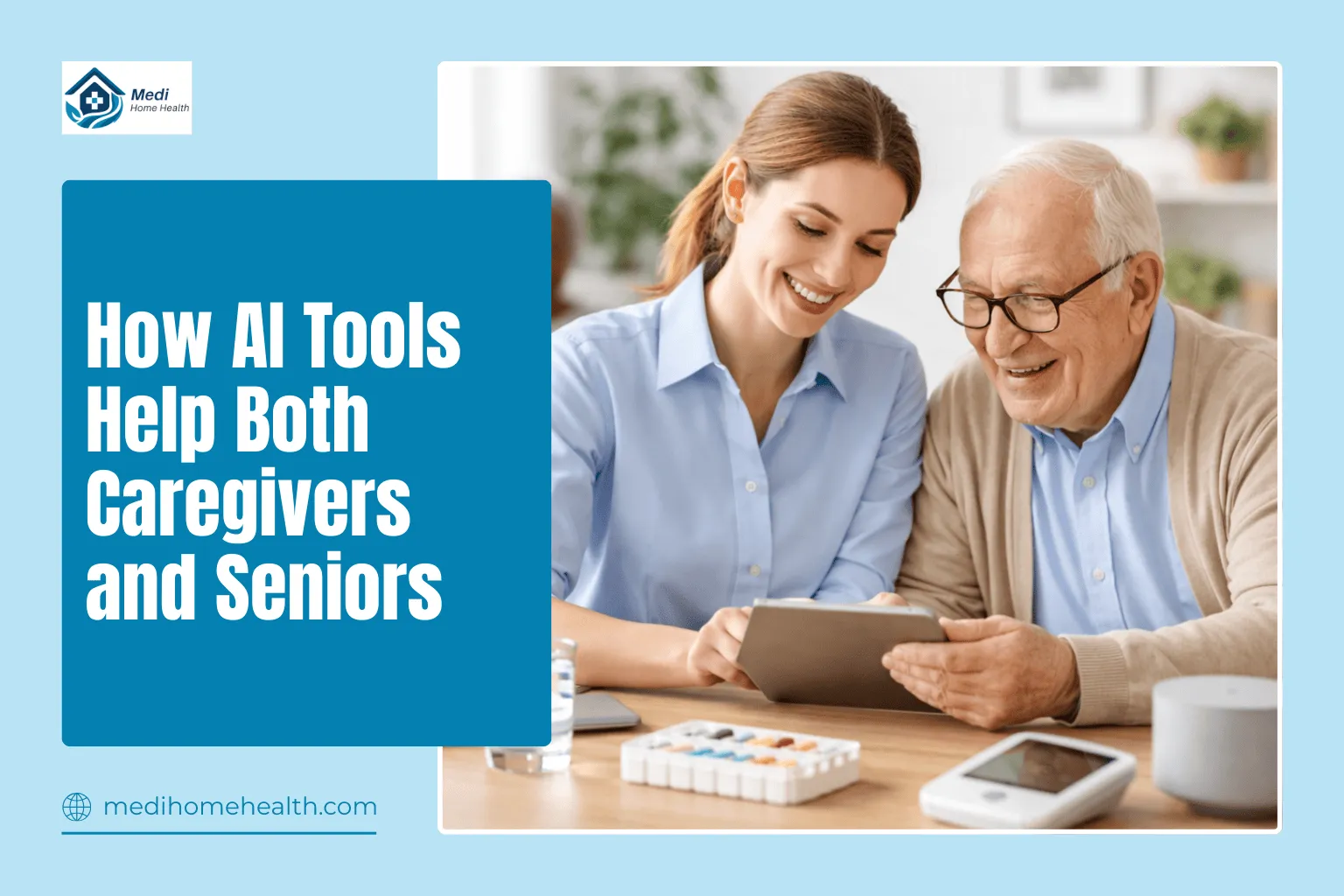
Artificial intelligence (AI) shows up in almost every part of daily life now, not just in technical systems. It powers tools we use at work, fitness trackers, shopping apps, and services that bring goods straight to your door.
Some AI-based resources can also lighten the load that comes with being a family caregiver. Many apps and digital platforms created for older adults and the people who support them can help you save time and make room in your week for things you would rather focus on together.
AI Tools for Family Caregivers
Whether you’re keeping up with medications, arranging visits, or trying to stay on track with your daily schedule, AI can support many of the responsibilities that come with caregiving.
The tools, apps, and digital services below use artificial intelligence to simplify routine tasks and help your loved one stay as independent as possible.
Fitness Wearables and Health Trackers
Wearable gadgets like smart watches and fitness bands can give you quick access to simple health information, including heart rate, steps taken, and sleep quality.
You can use one yourself or encourage your older family member to try one. The notifications may nudge you to be more active. Working with a healthcare provider, you can also review the data to notice habits that need attention, such as poor sleep or irregular eating patterns.
Smart Home Connections
Hands-free tools have existed for years, but newer systems like Siri and Alexa made it normal to manage lights, music, and household settings with only your voice.
Today, smart devices can pick up on daily habits and respond without prompting, such as raising or lowering the temperature or shutting off the TV at a certain hour. You can also set up your loved one’s device to remind them about key tasks, like taking medicine or drinking water. These reminders work well alongside medication support offered by your MediHomeHealth caregiver.
Tools That Strengthen Communication and Mental Activity
AI assists with communication and mental engagement through tools that adjust to personal needs. Some platforms can turn speech into written text instantly, translate conversations, or offer personalized cues that help keep older adults involved and talking.
These tools can reduce communication barriers between caregivers and those receiving care, especially when memory issues or hearing loss play a role. AI can also suggest brain games, reminders, or interactive content that fit someone’s abilities and interests, helping support mental activity and emotional connection.
AI Support for Seniors with Health Challenges
AI systems can also help older adults with medical concerns manage their health with more confidence. These technologies can monitor vital signs, remind them to take medicine, or notice small changes in daily patterns that may point to a developing issue.
If something appears unusual, the tools can notify caregivers or clinicians so they can respond sooner. For seniors living with long-term conditions such as diabetes or heart problems, AI can offer guidance or adjusted routines suited to their needs, supporting safer habits and giving families added reassurance.
Apps That Make Everyday Life Easier
Large-language models (LLMs) like ChatGPT and Gemini act like powerful digital helpers. Instead of showing long lists of search links, they review online information and break it down into short, clear answers that match what you ask.
You can type in specific prompts such as:
- “Suggest a few simple dinner ideas I can make using canned tomatoes, rice, and ground turkey.”
- “Share a playlist of well-known 1960s songs that would brighten a senior gathering or social hour.”
- “If my aging parent is newly diagnosed with Alzheimer’s, which online caregiver communities could I join for support?”
- “Create a realistic weekly fitness routine for a working adult who also looks after an elderly parent and has school-age children.”
- The LLM will respond using information gathered from many sources. Some systems may even learn your style over time.
Remember: DO NOT ENTER personal health or financial information into an LLM. Think of it as a large open system, not a private one. AI-generated information can also be inaccurate or incomplete. Always check with a healthcare professional before making changes to medical or wellness routines.
Support from MediHomeHealth
Technology can make caregiving smoother and help older adults stay active and connected when you’re not with them. It becomes even more helpful when paired with in-person help from your MediHomeHealth caregiver.
If your loved one needs companionship, support with daily tasks, or breaks for family caregivers, expert assistance from a trained home care professional is just a call or click away.
More Blogs You May Like

What Exactly Medicare Covers and What Are Out-of-Pocket Costs
When an elderly parent requires home care, knowing how Medicare applies becomes important for making sound care choices...
Read More
Best Fall Prevention Exercises for Seniors
Falls are one of the most common and serious risks facing older adults. Each year, over 14 million...
Read More
Best Anti-Inflammatory Foods for Seniors Needing Home Care
The word “inflammation” is being used everywhere lately. From social media posts about digestion to podcasts focused on...
Read More