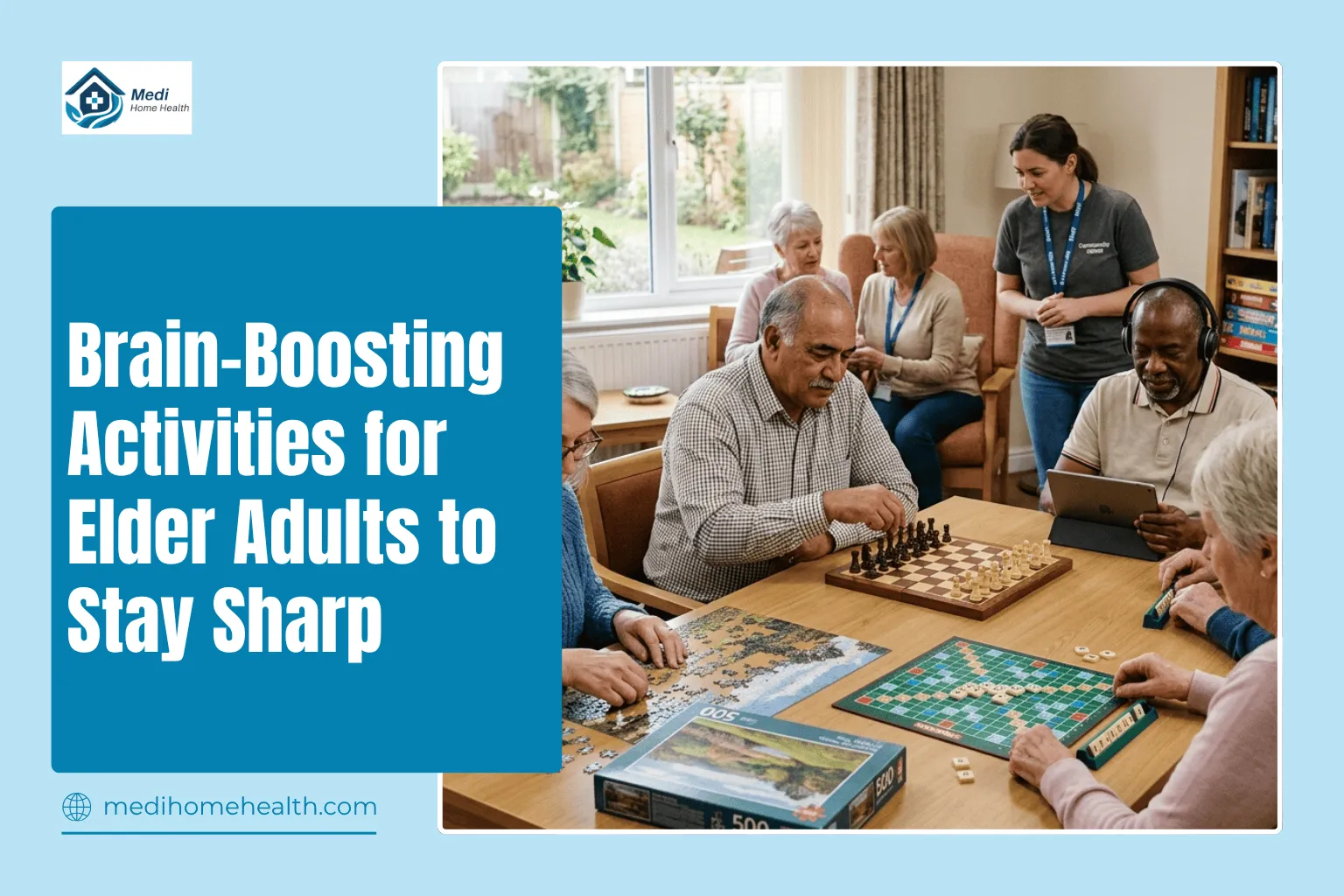
Over the years, I have watched many families buy costly and complicated “brain exercise” devices for older relatives. In many cases, those products end up sitting unused after only a short period of time. The issue is usually not ability or intelligence; it is often a lack of interest and personal connection.
When an activity feels more like an exam or a task to complete, seniors often lose interest quickly. From a nursing standpoint, the most effective game is not always the most advanced one. It is the one a person enjoys enough to return to regularly. Consistent participation is what supports cognitive health. At MediHomeHealth, we encourage activities that are simple, enjoyable, and connected to everyday habits. Below are seven brain games for seniors that focus on enjoyment and participation while making mental activity a natural part of the day.
Why Playing Together Matters
There is an important difference between simply giving someone an activity and actively joining them in it. Handing a senior a tablet and leaving the room is passive involvement; sitting beside them and talking through the activity creates real engagement. Social isolation can contribute to cognitive decline and may have a greater impact than aging itself. Games can become opportunities for conversation. When seniors explain their thinking process, they are exercising memory, communication skills, and decision-making abilities at the same time.
Everyday Digital Games That Encourage Routine
Many people believe older adults avoid technology, but tablets can be useful tools when introduced in a simple way. We often recommend short digital games that can be completed in a few minutes, helping avoid mental exhaustion.
1. Wordle (A Daily Word Challenge)
Wordle is popular because it is straightforward and stress-free: one puzzle each day using a single word. It serves as a simple daily language exercise that feels current and engaging. It also creates opportunities for connection. Many seniors enjoy sharing their scores with children or grandchildren through text messages, giving them something enjoyable to discuss that is unrelated to health concerns or appointments.
2. NYT Connections (Finding Relationships Between Words)
Connections provides a strong mental challenge by asking players to sort words into related groups. This activity supports pattern recognition and memory skills. It encourages people to look beyond obvious meanings and identify deeper connections between ideas, helping maintain the organizational thinking used in everyday life.
3. NYT Strands (Theme-Based Word Searching)
As one of the newer games from The New York Times collection, Strands can be especially helpful for older adults. Players search for words connected to a shared theme within a grid of letters, encouraging flexible thinking. From a clinical perspective, it promotes the ability to process different pieces of information and connect them to a larger idea.
Traditional Paper Games for Concentration and Reasoning
While digital activities offer benefits, paper-based games also provide unique advantages. Clinical Note: Large-print versions are usually the best choice. Small text can strain the eyes and cause discomfort that may be mistaken for mental fatigue.
4. Sudoku (Pure Logic Practice)
Sudoku is useful because it relies on numbers and reasoning rather than vocabulary. This makes it a good option for individuals who may have language-related difficulties or memory challenges. The game encourages structured thinking, planning, and problem-solving, helping keep important reasoning skills active.
5. Word Search Puzzles (Visual Attention and Awareness)
Word search activities strengthen visual scanning abilities. This is the same skill people use when locating medication bottles on a busy counter or noticing objects that could cause a fall. Practicing visual scanning through games can help reinforce awareness skills that support everyday safety.
Activities That Support Communication and Hand Skills
6. Crossword Puzzles (A Long-Standing Favorite)
Crossword puzzles continue to be one of the best tools for encouraging memory recall and knowledge retention. They require people to draw on information stored over many years, including vocabulary and facts. We often recommend completing crosswords together because solving clues as a team creates connection and enjoyment rather than frustration.
7. Jigsaw Puzzles (Supporting Dexterity and Spatial Skills)
Mental sharpness and physical ability are closely connected. Jigsaw puzzles stand out because they combine problem-solving with hand coordination. Picking up and placing puzzle pieces helps maintain finger strength and fine motor control, which are useful for everyday activities such as fastening buttons or holding eating utensils.
Why the Home Environment Matters
The setting can have a major effect on cognitive performance. At home, it is easier to create comfortable conditions by improving lighting, reducing glare, and limiting background noise. This helps make activities feel relaxed and personal rather than structured or clinical.
Looking for Someone to Play Along?
While aging cannot be prevented, days can be made more engaging, enjoyable, and mentally active. A suitable game shared with the right companion creates meaningful moments that benefit both emotional and cognitive well-being.If you are looking for a companion in Loudoun County (or nearby areas in Virginia) who matches your loved one’s interests and personality, someone who knows when to encourage participation and when to simply enjoy a conversation, contact MediHomeHealth today. We can help connect your loved one with the support they need. Call +1 (253) 565-2365 for details.
More Blogs You May Like

How In-Home Care Enhances Quality of Life
Receiving support at home brings comfort, familiarity, and personal help, letting you keep your independence while getting the...
Read More
What are In-Home Personal Care Services for Seniors
As people age, everyday activities that once felt simple can start to feel harder. Tasks like getting dressed,...
Read More
Early Warning Signs of Parkinson’s Disease in Elders
Early Warning Signs of Parkinson’s in Simple View
Read More