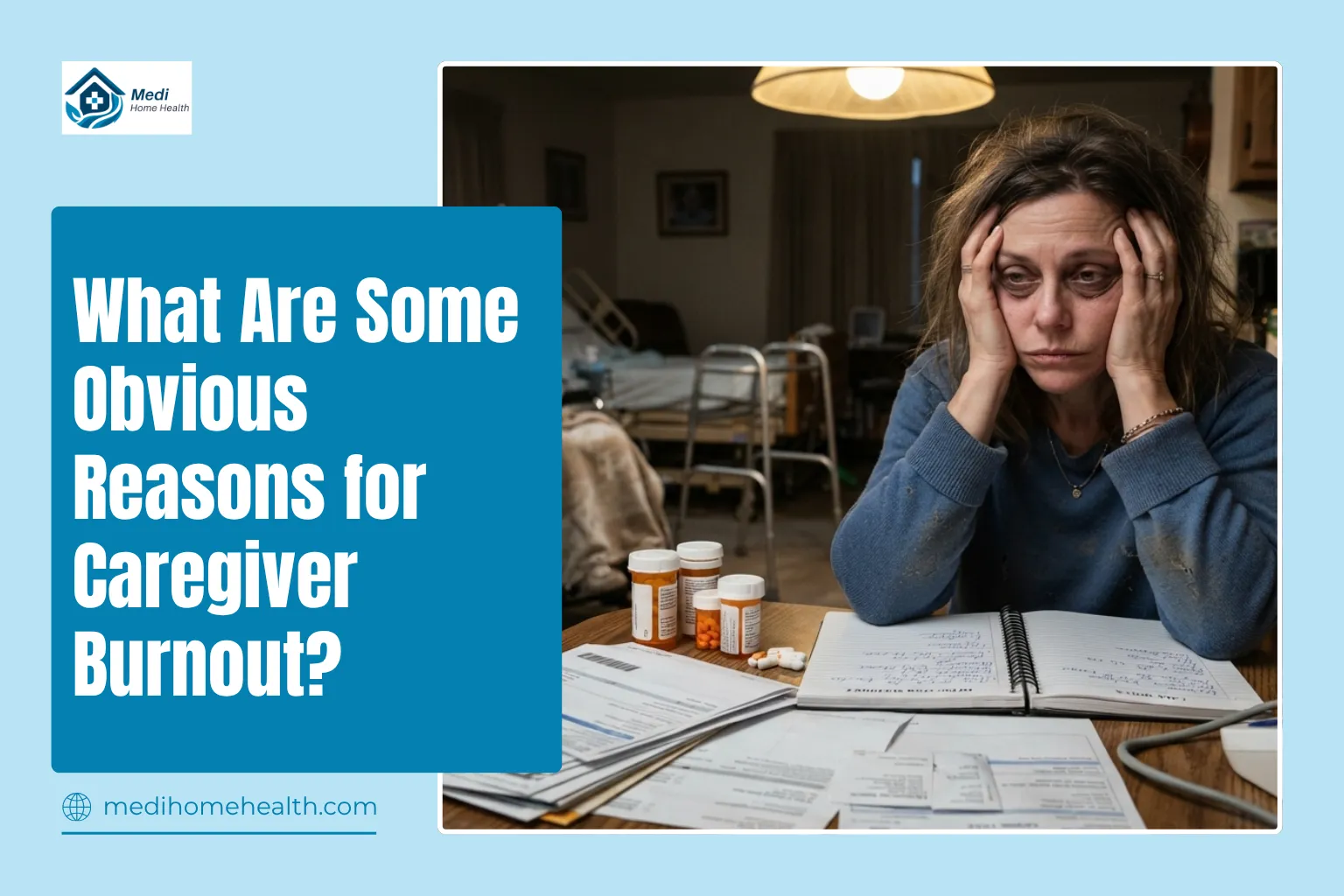
Caregiver burnout develops when the ongoing demands of care cause emotional, physical, and mental exhaustion. It can change a person’s attitude from patient and supportive to frustrated, withdrawn, or uninterested. Caregivers dealing with burnout may experience anxiety, depression, tiredness, and ongoing stress. Other common signs of caregiver burnout include:
- Social isolation
- Less interest in activities they once enjoyed
- Changes in eating habits that lead to weight gain or weight loss
- Disrupted sleeping patterns
- Getting sick more often
- Thoughts about self-harm or hurting the person receiving care
Burnout can arise from several different pressures and caregiving situations. Recognizing these causes early can help caregivers take steps to protect their own health and avoid becoming overwhelmed.
1. Putting Personal Health Aside
Caregivers who focus heavily on another person’s needs can easily overlook their own physical and emotional wellbeing. They may skip balanced meals, lose sleep, or stop exercising regularly, even though these habits are important for maintaining the energy and strength required to provide dependable care.
Family caregivers should make their own wellbeing a priority. If caring for an aging loved one has become overwhelming, professional respite care can provide much-needed relief. Loudoun County families can turn to MediHomeHealth for support. A professional caregiver can care for your loved one while you rest, work, handle errands, or take time away for a vacation.
2. Taking on Too Much
Family caregivers often manage caregiving alongside jobs, household responsibilities, family obligations, and financial concerns. Trying to handle all of these duties at once can gradually increase stress and eventually leave the caregiver feeling physically and emotionally exhausted.
3. Expecting Too Much from Caregiving
Some caregivers believe their sacrifices should lead to major improvements in the senior’s health, behavior, or overall wellbeing. When those results do not happen, they may feel disappointed, frustrated, or as though their efforts have little value.
Providing care for an older loved one can be difficult when family members lack formal training or experience in home care. They do not have to manage these responsibilities without help. MediHomeHealth provides families with dependable support through live-in and respite care, along with specialized care for seniors with Alzheimer’s, dementia, stroke, and Parkinson’s.
4. Dealing with Difficult Conditions
Taking responsibility for an aging family member can become especially stressful when the household is already facing financial challenges. Caregivers may also have limited access to resources or lack the skills needed to organize schedules, manage care needs, and handle the many tasks involved in supporting a senior.
5. Trying to Cope Without Help
Having caregiving experience or basic training does not remove the need for outside support. Caregivers benefit from having relatives who can share responsibilities, professional respite workers who can provide breaks, or local support groups where they can discuss problems and exchange practical advice with others in similar situations.
Families that need additional support caring for an aging loved one can turn to MediHomeHealth, a trusted Loudoun County, VA home care provider. Our customizable care plans can include meal preparation, personal hygiene assistance, mental and social activities, and many other daily services. To discuss an in-home care plan for your loved one, call us at +1 (253) 565-2365 today.
More Blogs You May Like

A Guide to Transitioning Loved Ones to In-Home Care
Choosing to introduce professional home care into your family routine is an important step in your loved one’s...
Read More
How Senior Loved Ones Can Cope with Stress
Getting older can bring new concerns involving health, finances, and major life changes, which may cause stress to...
Read More
Caregiver Plan for Elderly Loved One at Home
Looking after elderly loved ones takes careful thought to help make sure they stay safe, comfortable, and content....
Read More