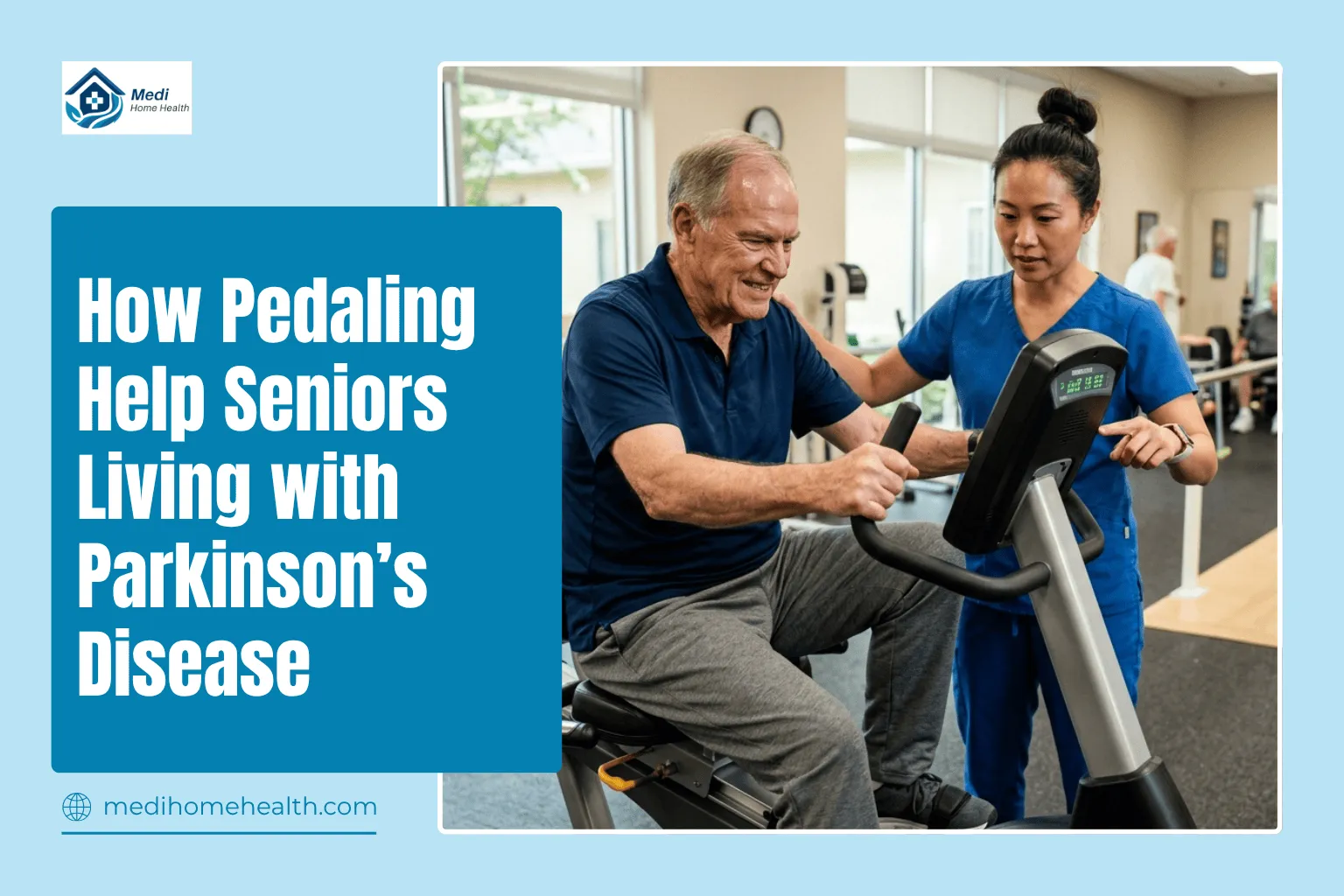
Parkinson’s disease affects millions of Americans and gradually impacts the brain’s ability to control movement. As the condition advances, many older adults develop stiffness, slower movements, and uncontrollable tremors. While medications remain an important part of treatment, regular exercise is also encouraged to support mobility and flexibility. Researchers at the Cleveland Clinic found that cycling may offer noticeable relief from Parkinson’s symptoms.
An Unexpected Finding from a Fundraising Ride
In 2005, biomedical engineer Dr. Angel Perez joined a charity bicycle ride across Iowa to raise money for Parkinson’s research. He rode a tandem bicycle with a woman who had Parkinson’s disease. Since she matched his pedaling speed, she maintained a pace of about 80 to 90 revolutions per minute. During the ride, she noticed her Parkinson’s symptoms became much less noticeable.
Three years later, Dr. Perez completed another tandem ride with a different participant who also had Parkinson’s disease. This rider normally experienced severe tremors and depended on a surgically implanted device to control movement in one arm and hand. As the ride continued, his symptoms improved enough that he was able to switch the device off without his tremors returning.
Although Parkinson’s disease still has no cure, many seniors can improve their quality of life with the right support. Older adults living with Parkinson’s often benefit from professional in-home care that helps them manage daily routines and maintain healthy habits. MediHomeHealth provides dependable in-home care services that help seniors remain active, reduce health risks, and enjoy greater independence at home.
What the Research Found
In 2010, Dr. Perez and fellow researchers launched a clinical study to better understand how cycling affects people with Parkinson’s disease. The study included 26 participants between the ages of 30 and 75. Half of the group rode a stationary bicycle at a comfortable pace for 40 minutes, three times each week. The remaining participants completed the same schedule while pedaling at a forced pace of 80 to 90 revolutions per minute.
After eight weeks, participants who used the motor-assisted Theracycle showed reduced tremors, better movement, and improvements in their sense of smell. Even two weeks after the program ended, those who completed the higher-speed cycling sessions continued experiencing fewer Parkinson’s symptoms.
Researchers also performed MRI scans before, during, and after the exercise program to monitor changes inside the brain. As participants continued cycling, the scans showed stronger activity and improved communication between areas involved in movement, including the motor cortex and the back portion of the thalamus.
Helping an older adult stay active while living with Parkinson’s can be difficult for family caregivers. Families who need extra support can benefit from professional respite care in Loudoun County, VA, can rely on MediHomeHealth to provide temporary relief while encouraging seniors to stay physically active, eat nutritious meals, remain socially engaged, and practice healthy daily habits.
Long-Term Benefits Continue to Be Studied
Since the original research, more than 150 people with Parkinson’s disease have participated in Theracycle studies and achieved similar results. Researchers continue investigating why forced-rate cycling appears to reduce symptoms and how these improvements occur inside the brain.
When Parkinson’s medications are stopped, symptoms often return within several hours. By comparison, some people who completed Theracycle sessions continued experiencing symptom relief for several weeks after finishing the exercise program.
Dr. Perez does not suggest replacing medication or discontinuing implanted treatment devices. Instead, he believes forced-rate cycling may be a valuable addition to existing Parkinson’s treatment plans. Researchers are also exploring whether other forms of structured exercise can produce similar improvements.
Professional in-home care can make daily life easier for seniors living with Parkinson’s disease. Families searching for trusted Loudoun County and Virginia home care providers can turn to MediHomeHealth. From respite services to specialized care for Parkinson’s, Alzheimer’s, dementia, and stroke recovery, our caregivers provide compassionate support that helps seniors live safely at home. To learn more about our in-home care services, call MediHomeHealth today at +1 (253) 565-2365.
More Blogs You May Like

How Long Does Palliative Support Usually Last?
When a loved one is dealing with a serious medical condition, it’s natural to have questions about the...
Read More
Care From Afar: How to Deal with Challenges of Long Distance Caregiving?
Looking after elderly loved one from a distance can bring a different set of difficulties. Many families end...
Read More
Foods that Are Actually Good for Elder Heart Health
A study from the Harvard School of Public Health found that about 70 percent of heart disease cases...
Read More