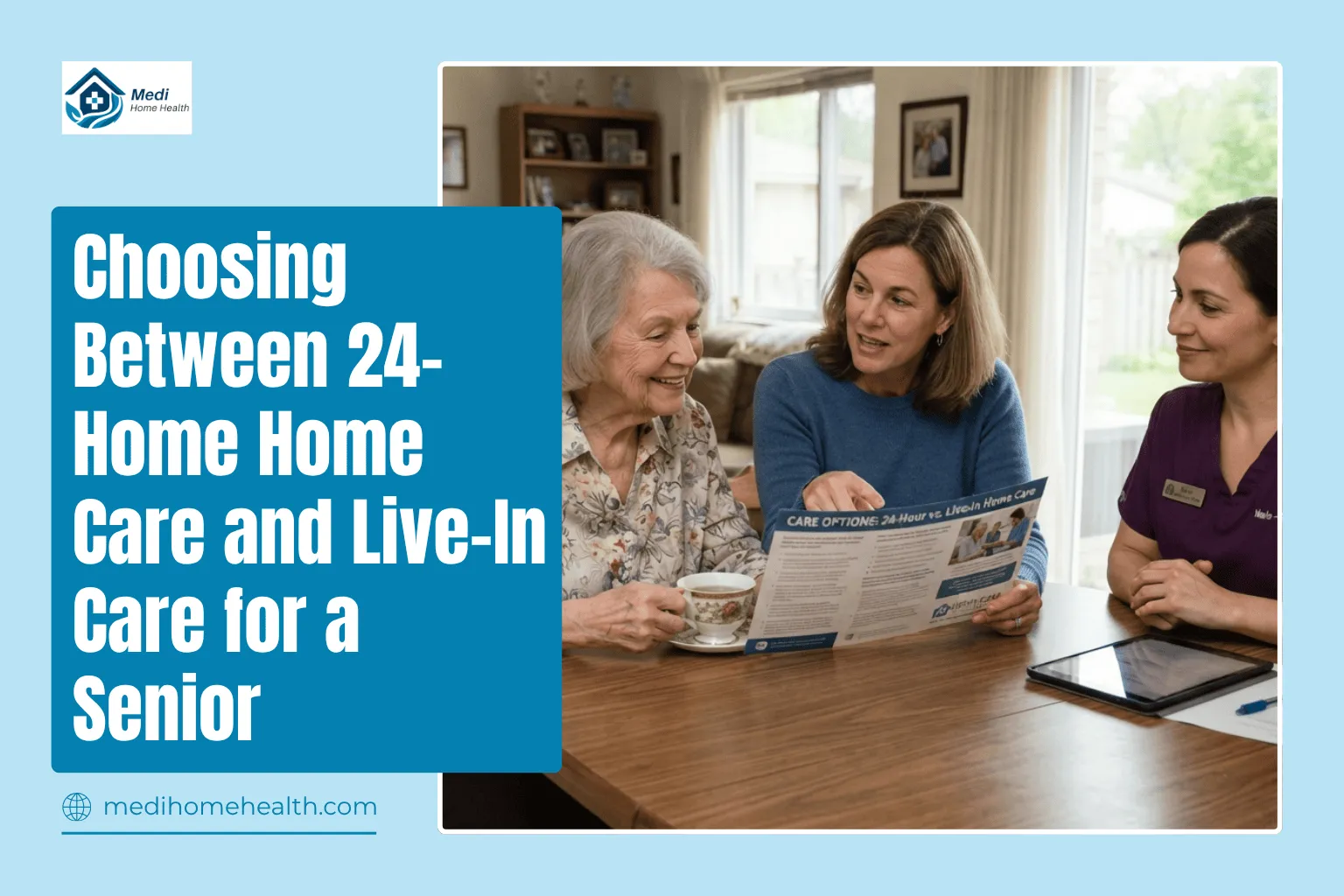
The biggest difference between 24-hour home care and live-in care depends on what happens overnight. With 24-hour care, caregivers work in rotating shifts so someone is awake and available at all times. This option is often the best choice for seniors who need repeated help during the night, such as assistance with repositioning, toileting, or wandering related to dementia. Live-in care places one caregiver in the home for several days at a time. That caregiver is allowed scheduled sleep and meal breaks, making this arrangement better suited to seniors who are generally stable, sleep through the night, and mainly need daytime assistance with someone available if an unexpected issue arises. Budget, safety concerns, and the importance of having the same familiar caregiver should all be considered before making a decision.
How Around-the-Clock Care Works
Twenty-four-hour home care relies on a small group of caregivers, usually between two and four people, who rotate through scheduled shifts. This setup ensures there is always a caregiver awake and actively watching over your loved one, day and night. Many families don’t realize this is different from live-in care until they begin comparing services in detail. Because someone is always alert, this option provides continuous supervision even while your loved one is asleep.
This type of care is generally recommended when overnight support is essential. Seniors living with advanced dementia who tend to wander at night, individuals recovering from hospitalization who need regular repositioning to prevent pressure injuries, or older adults requiring several bathroom visits overnight are often better served with 24-hour care instead of a live-in arrangement.
Understanding Live-In Care
Live-in care means one caregiver stays in the home for an extended period, often several consecutive days, while providing assistance throughout the day and remaining nearby overnight. During this arrangement, the caregiver is legally entitled to uninterrupted sleeping hours and scheduled meal breaks. These requirements are not optional. In Virginia, home care agencies must schedule live-in caregivers according to state and federal labor rules instead of expecting someone to remain on active duty around the clock.
Because of this structure, live-in care works best for seniors who usually sleep through the night without needing regular hands-on help. The caregiver remains available if an unexpected fall, confusion, or emergency occurs. Many families also appreciate the consistency this model provides, since one or two caregivers often build a close relationship with the senior over time instead of relying on a larger rotation of staff.
Looking at the Main Differences
Many families initially believe live-in care is simply a lower-cost version of 24-hour care. Although it is often less expensive, the main distinction is the level of overnight supervision provided. Live-in care generally requires fewer caregivers, which usually lowers overall costs. However, pricing still depends on your loved one’s individual care needs and how much direct assistance is required throughout the day and night.
Consistency is another important point to consider. Live-in care usually allows seniors to become comfortable with one or two caregivers, which can be especially helpful for someone living with dementia or anyone who feels more secure around familiar people. With 24-hour care, several caregivers rotate through shifts by necessity. Even so, experienced agencies try to assign the same small team whenever possible to provide familiarity and continuity.
Staffing Rules Families Often Overlook
Some families assume one caregiver can simply remain awake and provide continuous care for several days if necessary. In reality, labor regulations and basic safety standards make this impossible for licensed home care agencies.
Providing true 24-hour care for an entire week equals 168 hours of coverage. Under Pennsylvania labor laws, one caregiver cannot legally or safely work that schedule alone. Depending on whether caregivers work 8-hour or 12-hour shifts, a complete care plan generally requires two to six caregivers, with additional backup available if someone becomes ill or takes scheduled time off. Understanding these staffing requirements helps explain why Pennsylvania agencies organize care differently from agencies in some other states.
Knowing this ahead of time helps families develop realistic expectations. It is common to imagine one trusted caregiver providing nonstop care, but both live-in care and 24-hour care usually involve a small group of caregivers working together so everyone receives proper rest while your loved one continues receiving dependable care.
When More Comprehensive Care May Be Needed
Hourly or part-time home care works well for many seniors over several years, but changing health conditions sometimes make additional support necessary.
Repeated falls, especially those that happen overnight, often suggest that supervision should continue beyond normal daytime visits. Declining personal hygiene, such as skipping baths or repeatedly wearing the same clothes, may indicate increasing physical limitations or confusion that requires more consistent help. Nighttime wandering and significant memory loss that makes being alone unsafe are also strong signs that continuous overnight supervision may be the safer option instead of live-in care.
Recovery after surgery or hospitalization is another situation that often increases care needs. When physicians recommend regular monitoring, medication reminders, or frequent repositioning, families may find it difficult to provide that level of support while managing work, children, and other responsibilities.
Important Questions to Discuss with a Care Manager
Choosing between these care options is rarely straightforward, and an experienced care manager should evaluate your loved one’s specific needs instead of automatically recommending one service over another.
Ask how many caregivers typically participate in a 24-hour schedule and how staffing changes are handled if someone calls out sick. Ask how overnight rest periods work for live-in caregivers and what happens if your loved one needs assistance during those hours. You should also ask whether your loved one’s medical condition and behavior truly require someone to stay awake overnight or whether having a caregiver present in the home would provide enough support. Sharing details about falls, wandering, incontinence, and memory changes will help the care manager recommend the most appropriate care plan.
Choosing the Care That Matches Your Loved One’s Needs
Many families compare live-in care and 24-hour care mainly by looking at cost. A better approach is to match the service to what your loved one actually needs during the night. Seniors who sleep well and mainly need companionship and daytime assistance may not benefit from paying for continuous overnight supervision. On the other hand, selecting live-in care for someone who requires frequent nighttime assistance can create safety concerns for both the caregiver and the senior.
The best care plan starts with an honest discussion about what really happens during the overnight hours instead of focusing only on price or assumptions. Families throughout Loudoun County and nearby areas who are considering these options can contact MediHomeHealth for a complimentary in-home consultation. A care aide can evaluate your loved one’s situation and recommend the care model that best meets your family’s needs rather than offering the same solution to everyone.
More Blogs You May Like

The Significance of Companionship in Wellbeing of Elderly Loved Ones
As people grow older, staying in touch with others can become harder. Retirement, limited movement, and losing close...
Read More
How Dementia Alters Visual Perception in Older Adults
Dementia can lead to a wide range of symptoms, many of which affect how the brain functions. Although...
Read More
Staff Training Essentials for Reducing Falls in Nursing Homes
Falls remain one of the most frequent and serious safety concerns in nursing homes, often resulting in injuries,...
Read More